




News

News from the institute

Latest news

  • Medicine
  • AI Engineering
  • Software & Systems Engineering
Digital medicine

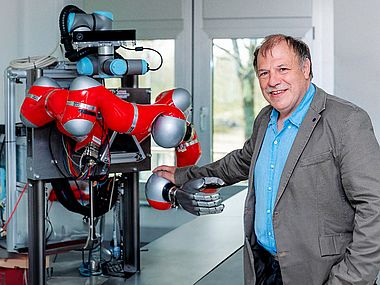
Training with AI for the operating room of tomorrow

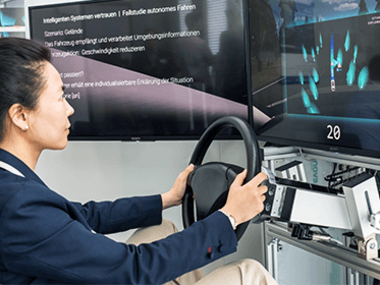
| Robot-assisted surgery requires the highest level of precision. However, training is costly and complex: Trainees must not only master individual procedures, but also understand the entire system and interact with it confidently. The GRATA research project analyzes precisely this training scenario and combines simulation with semantic knowledge models and generative AI to create a holistic training system. In doing so, it delivers real added value for everyday clinical practice and sets new standards for the efficient surgical training of the future.
  • Automotive
  • AI Engineering
  • Software & Systems Engineering
Interview

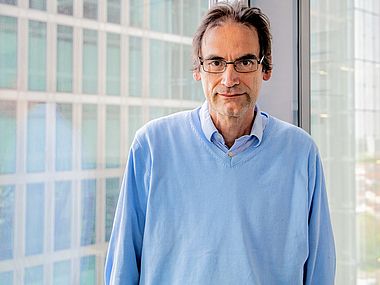
Why testing is becoming the most important discipline in the automotive industry

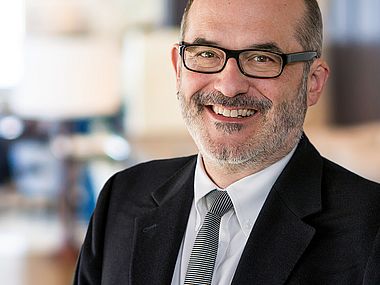
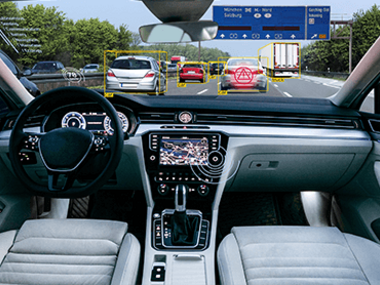
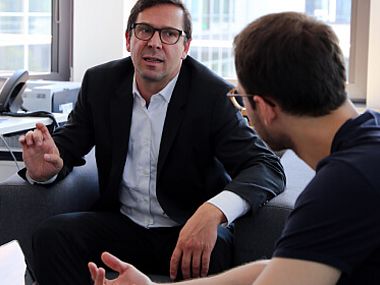
| Autonomous vehicles and other AI-driven systems are becoming increasingly complex, making safety assurance a critical challenge for industry. In this interview Prof. Dr. Andrea Stocco, Head of Automated Software Testing at fortiss, explains how his team supports companies in tackling these challenges from scenario-based testing and cross-simulation to the use of generative AI for real-time simulation. He highlights how fortiss helps partners align with safety assurance standards, streamline certification, and bring safe, innovative technologies to market with greater confidence.
  • Energy
  • IoT Engineering
HANNOVER MESSE 2026

Smart energy management as a competitive advantage in industry

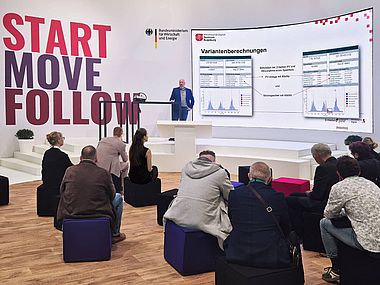
| With a clear focus on artificial intelligence (AI), digitalisation and sustainable energy supply, HANNOVER MESSE 2026 once again underlined its role as the leading international platform for industrial transformation. Under the overarching theme “THINK TECH FORWARD”, companies, research institutions and policy-makers presented solutions for high-performance, resilient and, at the same time, climate-friendly industrial value creation. This year, fortiss was represented at the joint stand of the Federal Ministry for Economic Affairs and Energy (BMWE) under the motto “START MOVE FOLLOW”, where it presented, among other things, the forward-looking project EILE (Energy Knowledge and Intelligent Application). The project addresses key challenges of industrial transformation: rising energy prices and increasing regulatory requirements, as well as the need for transparent and data-driven decision-making.


  • Energy
  • IoT Engineering
Event

Data centers: the beating heart of the local energy transition

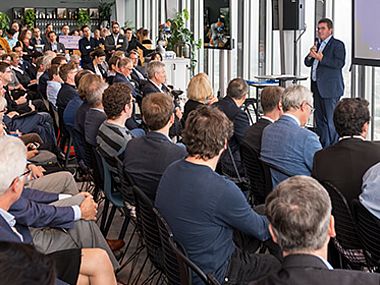
| The massive rise of artificial intelligence (AI) is not only transforming the digital landscape but also placing physical demands on the infrastructure of our cities and municipalities. On March 17, 2026, experts from the fields of science, energy, and politics gathered at the Leibniz Supercomputing Centre (LRZ) to discuss the role of data centers as strategic partners for municipalities and public utilities.
  • Automotive
  • Software & Systems Engineering
Project closure

New test methods for verifying safety-critical vehicle software

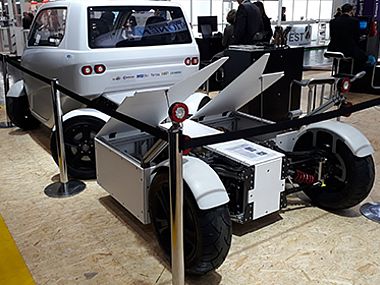
| The TeFoSa (Testing for Safety) research project, which was implemented in collaboration with TTTech Auto, impressively demonstrates how automated testing procedures can make the verification of safety-critical vehicle software significantly more efficient. At the same time, TeFoSa provides valuable insights that specifically support the continuous development of software processes in the automotive industry.
  • IoT Engineering
Award

CODECO selected as “Success Story 2025” by the National Contact Point DIT

| The Horizon Europe project CODECO, coordinated by Prof. Dr. Rute Sofia, was selected as a 2025 Success Story and featured in the yearbook “Success Stories from EU Projects – Research and Innovation for Europe’s Digital Infrastructure.”
  • Medicine
  • AI Engineering
Project closure

AI assistance system reduces workload in emergency rooms and improves patient care

| Emergency departments in Germany are under pressure: fluctuating patient numbers and rising demands strain staff and processes. An AI-based system helps detect bottlenecks early and manage workflows efficiently.
  • Production
  • Software & Systems Engineering
Project closure

Digital twins as the key to the production of tomorrow

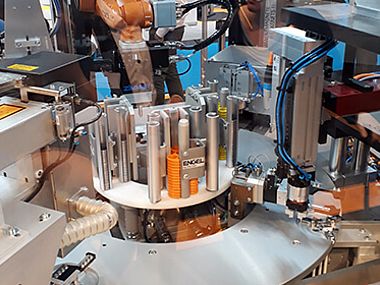
| Industrial automation technology is becoming increasingly digital and is fundamentally transforming manufacturing. Companies can make their production processes more efficient, flexible, and connected — from individual machines to complex production systems. As part of the three-year research project BaSys4Transfer, fortiss and its partners demonstrated how model-based engineering and the use of digital twins enable the transition to flexible, digitalized manufacturing structures.
  • Energy
  • AI Engineering
Project closure

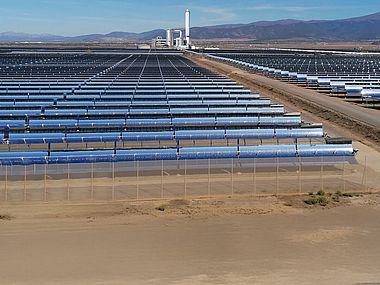
Artificial intelligence optimises solar thermal power plants

| The successful completion of the AI flagship project ‘AuSeSol-AI’, funded by the Federal Ministry for the Environment, Climate Protection, Nature Conservation and Nuclear Safety, marks the end of three years of intensive collaboration between leading German and European research and industry partners. The aim of the project was to systematically tap into the potential of artificial intelligence (AI) for monitoring, controlling and optimising concentrating solar thermal power plants.
  • Energy
  • IoT Engineering
Interview

How electricity grids remain stable when wind and sun take over

| The global energy landscape is increasingly shifting towards sustainability - and with it the pressure on the electricity grid to evolve and meet new requirements. The energy transition not only brings more renewable energy sources into the system, but also a new complexity: decentralized generation, volatile feed-in, fluctuating consumption. How can stability, efficiency and resilience be guaranteed in such a dynamic environment? And which technologies help to detect faults at an early stage and react to grid fluctuations in real time? We spoke to Dr. Markus Duchon - Head of the fortiss competence field Architectures and Services for Critical Infrastructures. The focus: digital innovations that will make the power grids of tomorrow stable, flexible and intelligent. Whether AI-based fault detection, autonomous grid control or digital twins - for him, technology plays a key role in building intelligent and adaptable energy infrastructures.
  • Automotive
  • Software & Systems Engineering
Interview

Automation and integration as the key to efficient safety

| Safety testing for AI-based systems is often misunderstood. Many assume that once a system has been tested, it stays safe but even the smallest software change can make old test cases obsolete. In this interview, Tiziano Munaro, researcher at Model-based Systems Engineering at fortiss explains why automation and integration are key to keeping up with complexity. He explains how fortiss helps companies with open-source tools for automated test generation, smarter system architectures, and smooth integration into existing pipelines, so that safety testing becomes more scalable, cost-efficient, and future-proof.
  • Transfer
  • AI Engineering
Cooperation

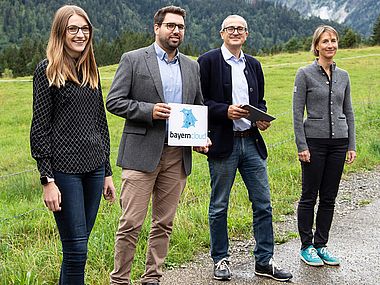
Bavaria launches AI Innovation Accelerator for SMEs

| With the “Bavarian AI Innovation Accelerator,” Bavaria supports small and medium-sized enterprises (SMEs), start-ups, and public institutions in adopting the responsible use of artificial intelligence (AI). On Wednesday of last week, Minister for Digital Affairs Dr. Fabian Mehring signed the declarations for close cooperation within the partner network of the project, which is funded by the Bavarian State Ministry for Digital Affairs.


  • IoT Engineering
Industry & research community

fortiss is shaping Europe’s future in 6G research

| The state research institute of the Free State of Bavaria for software-intensive systems, fortiss, is taking on a central role in European 6G research as a founding and board member of the new research and industry initiative, the Datacom Industry Association (DIA). The official founding of the DIA will take place on September 29, 2025, as part of an event in Munich and marks an important step towards creating a strong European platform for digital communication technologies.
  • Transfer
  • Software & Systems Engineering
Project closure

Digital toolbox supports companies in software projects

| Small and medium-sized enterprises (SMEs) can now receive practical support in the implementation of software projects. The new Software Engineering Toolbox (SE Toolbox) is a free digital toolbox that combines tried-and-tested tools and structured learning units — specially developed to make it easier to get started with digitalization and professional software development.
  • Production
  • IoT Engineering
Project closure

Automated risk management as a key to competitiveness

| After three years of successful research, the ASCA4IE project was able to present promising results at the end of March on the verifiability of security requirements for industrial IoT applications. Siemens Foundational Technologies played a key role as a project partner in the development and implementation of the solutions. The insights gained make a significant contribution to the secure and efficient use of edge computing platforms in industry, which enable significantly greater flexibility and efficiency in automated manufacturing by connecting devices and computing resources.
  • Production
  • AI Engineering
Project closure

Neuromorphic AI enables precise and energy-efficient action recognition in real time

| In sports, especially in tennis, the precise analysis of movements is becoming increasingly important. With the completion of the SpikingBody research project, fortiss has developed an innovative solution that uses neuromorphic AI to recognize player actions in real time and with exceptional energy efficiency. The system combines event-based image sensors with specialized neuromorphic hardware to enable precise, low-latency, and energy-efficient capture of human movements.
  • Production
  • AI Engineering
Interview

Sustainable production starts with intelligent solutions

| The manufacturing industry is undergoing a major technological transformation: automation, artificial intelligence (AI), connectivity and IIoT are becoming the driving forces of modern production systems. For instance, the integration of AI and collaborative robotics revolutionizes the way factories operate and enables smarter, more adaptable, and efficient production lines. But what challenges must be tackled to make these technologies a reality on the factory floor? How can manufacturing systems be designed for flexibility and futureproofing? What strategies help balance investment and operating costs in complex production environments? And how can we ensure that these systems are both cost-effective and scalable? In this interview, fortiss researcher Alexander Perzylo speaks about the future of smart manufacturing. He shares valuable insights into the latest developments, innovative solutions, and the critical role of research in shaping the manufacturing processes of tomorrow.
  • Energy
  • AI Engineering
  • IoT Engineering
Interview

How data accelerates the energy transition

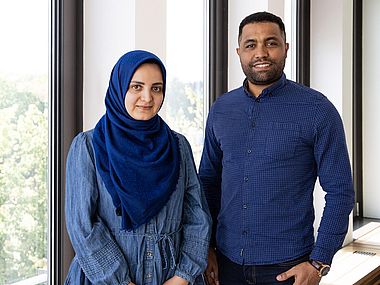
| As energy systems become more decentralized and dynamic, the role of data has never been more important. From planning to operation, access to high-quality, well-structured energy data is key to making smarter, faster, and more cost-effective decisions. But how can organizations harness this data effectively and what tools are available to help them do so? To shed light on these questions, we spoke with Mahsa Faraji Shoyari and Dr. Jessy Matar, researchers at the Architectures and Service for Critical Infrastructures competence field at fortiss. They share insights into how modern data infrastructures, automated processing, and digital twins are revolutionizing the way energy systems are planned, managed, and optimized.
  • Medicine
  • Automotive
  • Software & Systems Engineering
Project start

Innovative testing methods for greater safety in critical systems

| In safety-critical systems, even the smallest errors can have serious consequences—such as the failure of an autonomous driving function or the malfunction of a medical device. To prevent such risks, fortiss launched the binational cooperation project PlaTFoRm at the beginning of the year. Together with partners from research and industry in Germany and the United Kingdom, practical testing methods are being developed that can detect architectural flaws which may compromise the robustness of safety-critical systems. The focus is on approaches that can be applied in the early phases of development, enabling errors to be corrected before the final system integration and verification—thus avoiding time-consuming and costly changes.
  • Production
  • AI Engineering
Project closure

Energy-efficient robot control delivers real-time precision

| With the successful completion of the ELEANOR project, fortiss is advancing neuromorphic computing for real-time, energy-efficient robot control. By combining an event-based camera for sensory input with a neuromorphic chip for computation, the project demonstrates how biologically inspired hardware can improve precision, adaptability, and efficiency in industrial robotics.
  • AI Engineering
Project start

Neuromorphic computing creates an immersive digital experience

| Together with Simi Reality Motion Systems GmbH, fortiss has launched the EMMANÜELA project to research the use of neuromorphic sensor technology and neuromorphic computing in the field of augmented and virtual reality (AR/VR). By integrating this technology, which is based on the neuronal structure of the human brain, into the immersive possibilities of AR/VR, the potential of neuromorphic methods for applications in augmented digital worlds is being investigated. The project opens up new perspectives for innovative solutions and demonstrates their potential for future areas of application.
  • Automotive
  • Software & Systems Engineering
Interview

Reliable software as the key to tomorrow's mobility

| The automotive industry is facing one of the biggest technological transformations in its history: software is becoming the central innovative force of modern vehicles. For example, the development of autonomous driving functions requires not only state-of-the-art AI algorithms, but also safe, reliable and scalable software architectures. But what challenges need to be overcome in order to bring these technologies to the road? Which approaches ensure safety and reliability? How can software variants be managed efficiently? And which methods ensure compliance with the highest industry standards? In this interview, we talk to Simon Barner and Andreas Bayha, heads of the Model-based Systems Engineering competence field at fortiss, about the future of autonomous driving functions. They provide revealing insights into current developments, innovative solutions and the crucial role of research for the intelligent mobility of tomorrow.
  • Transfer
  • Energy
Project closure

A pioneering model for sustainable energy management in SMEs

| The successful completion of the EILE (Energiewissen und InteLigente AnwEndung) future project at the end of 2024 marked a significant milestone for forward-looking energy management. Under the leadership of the state research institute fortiss, a practice-oriented and generic process model was developed that enables small and medium-sized enterprises (SMEs) to get started with optimal and efficient energy management.
  • AI Engineering
Project closure

Shaping the digital future with "AI Made in Europe"

| After four years of groundbreaking research, the European HumanE AI project successfully concludes. In collaboration with leading researchers, industry experts, and policymakers, fortiss has worked on developing human-centered AI technologies that prioritize European ethical values and societal norms. Funded under the EU's Horizon 2020 program, the project has laid the foundation for a European approach to artificial intelligence that combines innovation with social responsibility.
  • Transfer
  • Energy
  • IoT Engineering
Project closure

Local electricity markets offer enormous potential for the energy transition

| At the end of the BEST research project, local electricity trading in the Euskirchen area was successfully tested on a digital marketplace. Together with commercial enterprises, households and other stakeholders in the region, the solution approach was evaluated in a practical context and the benefits illustrated using real data and specific application examples. The results show both the potential and the challenges of local electricity markets, which enable energy suppliers to efficiently manage supply and demand and develop customized products.
  • Production
  • AI Engineering
Project closure

Innovative impulses for automation and human-robot collaboration

| After four years, the EU-funded VOJEXT research project was successfully completed in September. The project laid the foundation for economically viable and technological developments in the areas of cognitive autonomous systems and human-robot interaction. The results mark significant progress in the transformation of the manufacturing and construction industry through digital technologies. fortiss made a decisive contribution to the project's success by developing an innovative, knowledge-based control system for robots that dynamically derives the necessary process steps and suitable resources.
  • Energy
  • IoT Engineering
Project closure

Regional electricity trading on a digital marketplace

| Whether photovoltaics on the production hall, municipal wind turbines or rooftop solar on your own home - electricity generation is becoming more decentralized as a result of the energy transition. The advantages of this decentralized and direct electricity trading system are to be exploited by a digital marketplace. The aim of the project “Blockchain-based decentralized energy market design and management structures”, or BEST for short, was to make this a reality. To drive this project forward, a practical test was launched in the Euskirchen area in the spring of this year.
  • Production
  • IoT Engineering
Project closure

Intelligent assistance system optimizes digital production processes

| After three and a half years of research, the final event of the DiProLeA project took place on July 17, 2024, at the Center for Science and Transfer (ZeWiS) in Obernburg. The research project successfully aimed to enhance the digitalization of development and production processes by developing a learning assistance system. The final results were presented at the event, marking substantial progress in the design of innovative products, services, and product-service systems, and significantly improving their development process.
  • Production
  • AI Engineering
  • IoT Engineering
Interview

Flexibility facilitates the development and integration of advanced robotics solutions

| Prof. Dr. Michael Beetz, renowned expert for plan-based control of robots, knowledge processing and representation, integrated robot learning and cognition-based perception, will support the fortiss competence field "Platform Engineering" as a Research Fellow in the future. In this interview, he talks about his previous projects at the University of Bremen and his collaboration with fortiss in the areas of platform engineering, knowledge representation and accountability design.
  • Production
  • AI Engineering
Project start

Neuromorphic sensors revolutionize industrial welding

| Cobots (collaborative robots), which can work closely with humans, are experiencing impressive growth rates and offer enormous potential for a wide range of industries. Until now, however, cobots have only been able to carry out pre-programmed actions and cannot react flexibly to unexpected events. With the CORINNE project, fortiss aims to overcome this limitation through the use of neuromorphic technology and enable robots to react to human gestures in real time and continuously learn new ones. In collaboration with Neura Robotics GmbH from Metzingen and the Technical University Chemnitz, the research results are to be applied in the field of welding work.
  • Energy
  • IoT Engineering
Project closure

Bavaria on the way to the energy transition: Digital energy twin as a key instrument

| Bavaria has set itself ambitious targets for the energy transition: By 2030, the share of renewable energies in electricity generation is to rise to 50 percent, and by 2040 the aim is even to be climate-neutral. To achieve these ambitious targets, efficient and data-based energy planning is essential. This is precisely where the eTwin.BY research project comes in, which was recently completed in collaboration with Eniano GmbH and HEWA GmbH.
  • Energy
  • IoT Engineering
Interview

Scientific expertise for renewable and sustainable energy systems

| Prof. Dr. Thomas Hamacher, an expert in energy systems in the context of disruptive technologies such as nuclear fusion, renewable energies, smart cities and electromobility, will support the fortiss competence field “Architectures and Services for Critical Infrastructures” (ASCI) as a research fellow in the future. In this interview, he talks about his collaboration with fortiss, emphasizes the institute's strength in translating scientific ideas into practical solutions and explains current projects.
  • Transfer
  • AI Engineering
Project closure

Digital transformation with low-code and AI

| In the process of digital transformation, it is essential for small and medium-sized enterprises (SMEs) to continuously increase their productivity in order to remain competitive in the long term. Low-code programming, especially in conjunction with AI-driven solutions, plays a key role in this. In order to exploit this potential, fortiss has conducted a research project with industry partner TIVITY to integrate AI functions into an existing low-code platform. The project led to the effortless implementation of AI workflows that enable processes to be optimized.
  • AI Engineering
  • Software & Systems Engineering
Interview

Working together to make AI safer, more robust and more comprehensible

| Dr. Fathiyeh Faghih and Dr. Tewodros Beyene have recently taken over the co-leadership of the Software Dependability field of competence at fortiss. In this interview, they talk about the exciting developments in the field of software dependability and provide insights and challenges in the development of secure, reliable software for cyber-physical systems (CPS).
  • Automotive
  • AI Engineering
Project closure

Hybrid AI methods for more security and data efficiency

| The completion of the KI Wissen project another milestone towards safe and reliable autonomous driving has been reached. The methods and tools developed offer great potential for shaping the future of mobility while ensuring the safety and reliability of autonomous driving systems. During the 39-month project period, 15 partners from the supplier industry, technology providers, research institutions, universities and public authorities combined their expertise to advance the development of robust AI methods for safety-critical functions. On March 21 and 22, 2024, the final project results were presented at the closing event in Frankfurt.
  • Automotive
  • AI Engineering
Project closure

Autonomous driving – safety is crucial

| According to a recent survey by Germany’s digital association Bitkom, 57% of Germans are convinced that means of transportation such as trains, buses, and cars will predominantly drive autonomously in the future. 49% believe that artificial intelligence (AI) can make the use of new mobility services more attractive. The results of the representative survey from the beginning of this year clearly show that acceptance of autonomous driving is growing. The safety factor plays a decisive role in ensuring that this remains the case. The KoSi (Cooperative Autonomous Driving with Safety Guarantees) joint project has taken safety a significant step forward, at least for autonomous cars. Together with its partners, fortiss successfully completed the three-year project at the beginning of January.
  • Transfer
  • Software & Systems Engineering
Project start

Digitization made easy – online toolbox for SMEs

| As part of the digital transformation process, small and medium-sized enterprises must continuously increase their efficiency and performance in order to remain competitive in the long term. A key component of this is the targeted use of customized software solutions. However, this often proves challenging in day-to-day operations due to limited resources and expertise. The aim of the Software4KMU project is to provide a software engineering toolbox that offers low-threshold yet comprehensive support.
  • Software & Systems Engineering
Software AutoFOCUS 3

New functions for the development of complex systems

| The complexity of modern software-intensive systems is increasing rapidly in all sectors. To meet this challenge, industry is increasingly adopting model-based systems engineering (MBSE). AutoFOCUS 3 (AF3) is a proven research platform that implements the latest results from fortiss in the field of model-based development. AF3 is available as open source software, and the new version 2.24 offers numerous new functions that further enhance the platform's capabilities.
  • Medicine
  • AI Engineering
Project start

Optimizing sports training with artificial intelligence

| Artificial intelligence (AI) and sport - a promising symbiosis for load prediction, increased training efficiency and injury prevention. While prevalent in professional sports, AI now enters popular sports as well. The trAIner project, initiated in mid-January at the facilities of Munich-based company Kinexon, aims to develop a context-based AI system for player development in amateur basketball over a two-year collaboration period.
  • Aerospace
  • AI Engineering
Project closure

Flying safely with AI - certification in aviation

| The rising number of passengers and the associated air traffic are increasingly pushing the civil aviation system to its capacity limits. The use of artificial intelligence (AI) could play an important role in meeting the challenges of this development. As part of the KIEZ 4-0 project, fortiss has therefore developed concepts together with its project partners from aviation and science to enable the certification of the safety of AI-supported applications in aviation. The results of the project were presented at the online closing event on February 6.
  • AI Engineering
Project closure

More transparency in food shopping with AI

| Climate-friendly and healthy consumption is not always easy to implement in everyday life - because in the jungle of content information, certificates of origin and labels, choosing the "right" product is often more difficult than expected. The web app "KISusCheck - Sustainable Shopping Assistant", which has been under development at the Kompetenzzentrum für Ernährung (KErn) since 2021, uses Artificial Intelligence and sound nutritional knowledge to ensure greater transparency when shopping for food. Together with business partner IBM Germany and the Research Institute of the Free State of Bavaria for software-intensive systems fortiss, the research results to date and a current prototype were presented at the end of November 2023. The app's programming code is available as open source.
  • Automotive
  • AI Engineering
Project closure

Artificial intelligence is the key technology for safe autonomous driving

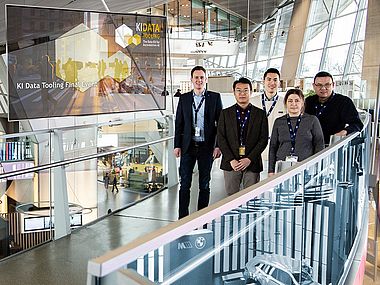
| The project KI Data Tooling ends on December 31, 2023. On December 5 and 6, 2023 - the project representatives, partners and guests met at the BMW Welt in Munich for the final event. With the present results, the project has successfully contributed to significantly advancing the application of artificial intelligence (AI) in the field of autonomous driving. A comprehensive data kit now facilitates the training and validation of AI functions and opens up new possibilities for intelligent mobility solutions.
  • Administration
  • IoT Engineering
fortiss short study

How digitalization succeeds in public administration

| Public administration in Germany is facing significant challenges, as the digital transformation is intensifying the pressure to make progress in the digitalization of administrative services. At the same time, citizens' expectations of easily accessible and uncomplicated services are increasing. The short study "Government as a Platform in Germany" recently published by the National E-Government Competence Center (NEGZ) provides in-depth approaches to solutions. The authors of the study are the two fortiss researchers Peter Kuhn and Dian Balta from the Platform Engineering competence field.
  • Transfer
  • AI Engineering
Conference

Generative AI: Opportunities for medium-sized companies

| Artificial intelligence (AI) technologies have long been part of social and economic life in Germany. With chatbots such as ChatGPT and Google Bard, Generative AI (GenAI) has recently moved into the public spotlight. But how can SMEs use these and other AI solutions? With this focus, the annual "AI for SMEs" conference was held on October 26 jointly with the IHK für München und Oberbayern (Chamber of Commerce for Munich and Upper Bavaria), the applied AI initiative and fortiss.
  • AI Engineering
  • Software & Systems Engineering
Project closure

Continuous engineering for a new generation of intelligent technologies

| With a successful closing event, the Foundations for Continuous Engineering of Trustworthy Autonomy (FOCETA) successfully completed the EU-funded research project of the same name in Grenoble. On October 11, the results were presented to the European Commission project officer and external experts in the final review meeting, while a general public audience was able to follow live demonstrations and a scientific workshop highlighting key achievements.
  • Administration
  • Software & Systems Engineering
Project closure

Coding Public Value – a digital contribution to the common good

| After three years, the fortiss research project Coding Public Value (CPV) was successfully completed in summer 2023. An interdisciplinary project team analyzed the implementation of legal, political and user-oriented requirements for software systems used by public media institutions. The project was funded by the Bavarian Institute for Digital Transformation (bidt) and as a result provides a public interest-oriented guideline. It includes suitable approaches and methods for software development.
  • Administration
  • Software & Systems Engineering
Interview

Digitization is changing the way society and organizations work

| Under the supervision of Prof. Dr. Daniel Mendez (Head of the Competence Field Requirements Engineering) fortiss scientist Oleksandr Kosenkov worked on the research project Coding Public Value (CPV) for more than three years and successfully completed it in summer. In the interview, he describes why the project makes an important contribution to the public good.
  • Transfer
Cooperation

Success through knowledge transfer in software innovations

| The importance of software engineering and artificial intelligence (AI) for companies in all sectors is steadily increasing. Small and medium-sized enterprises (SMEs) need to master these skills to remain successful and competitive and fully exploit their innovative power. Bavaria is ideal here as an excellent research and industrial location.
  • Software & Systems Engineering
Conference

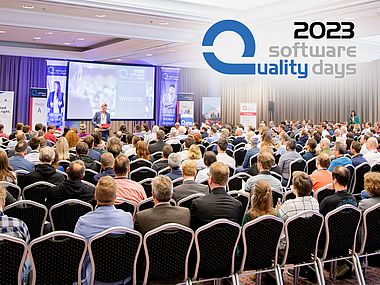
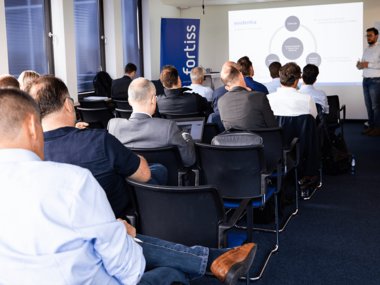
Successful conclusion of the 15th Software Quality Days in Munich

| The 15th edition of the renowned Software Quality Days took place for the first time in Munich from May 23-25, 2023 and was successfully accompanied by fortiss, the research institute of the Free State of Bavaria for software-intensive systems, as official partner, part of the Steering Committee and coordinator of the Scientific Track. More than 350 participants, 60 top-class speakers and 24 exhibitors experienced three days of intensive knowledge exchange, networking and education.
  • Software & Systems Engineering
Project closure

SpesML – Advanced Open-Source Modeling Workbench for Systems Engineering

| fortiss and its partners have successfully completed the project SpesML (SysML Workbench for the SPES Methodology), a multi-year effort aimed at leveraging the benefits of the scientifically founded SPES (Software Platform Embedded Systems) engineering methodology for software-intensive systems for the industrial SysML modeling language. Launched in 2021, the SpesML project was a collaborative effort between fortiss and several industry partners, including Foqee, Qualicen, qwitto, Schaeffler, Siemens, Siemens Healthineers and Validas, academic partners, including RWTH Aachen, TU Munich and University of Cologne and associated partners like Airbus, BMW and GfSE (Gesellschaft für Systems Engineering). The newly created modeling language enables engineers to address a key challenge in software development: Ensuring the correct and efficient modeling, development, and maintenance of complex software-intensive systems using SysML – from small embedded systems to large-scale distributed systems.
  • Energy
  • AI Engineering
  • IoT Engineering
Project closure

Artificial intelligence optimises solar thermal power plants

| The successful completion of the AI flagship project ‘AuSeSol-AI’, funded by the Federal Ministry for the Environment, Climate-Action, Nature Conservation and Nuclear Safety, marks the end of three years of intensive collaboration between leading German and European research and industry partners. The aim of the project was to systematically tap into the potential of artificial intelligence (AI) for monitoring, controlling and optimising concentrating solar thermal power plants.
  • AI Engineering
Cooperation

OTH and fortiss – Joint research for AI

| Another milestone for knowledge and technology transfer in the field of artificial intelligence has been established in Bavaria. To accelerate the further development and application of artificial intelligence in joint research projects, this past Monday fortiss GmbH, the Eastern Bavaria Technical University Amberg-Weiden (OTH) and Denkwelt Oberpfalz signed a letter of intent to collaborate in this area.
  • Automotive
  • Software & Systems Engineering
Project start

TASTE – transformation hub for the German automobile industry

| The automobile industry value chain is based increasingly on digitalized, software-driven mobility services. As a consequence, the scope and complexity of vehicle software are growing. In the future, how well the German economy is competitively positioned in the global market will be decided by short release cycles, efficient software integration and online updates. Against this backdrop, the German Federal Ministry for Economic Affairs and Energy (BMWE) has commissioned a consortium of research partners with the development of a nationwide transformation hub on the topic of digitalization, with a focus on software and engineering.
  • AI Engineering
  • IoT Engineering
Project closure

Embodied Intelligence: Engine of the Digital Transformation 2.0

| The results of a broad-based investigation conducted by fortiss, Siemens AG, the German Dialogue Institute and the Center for Digital Technology and Management have been released under the title “Embodied Intelligence: Engine of the Digital Transformation 2.0”. The goal was to identify the societal, economic and technical developments and challenges of embodied intelligence (EI) and recommend actions for government, business, education and science. The investigation focused on the question of how we can ensure our standard of living by actively addressing the challenges of the digital transformation, while at the same time actively managing it.
  • Administration
  • IoT Engineering
Cooperation

AKDB and fortiss join forces to develop concepts for future public administration services

| Close collaboration between science, practice and municipalities. fortiss and the Bavarian Institute for Municipal Data Processing (AKDB) are intensifying their collaboration on public administration services of the future. The goal is to transfer the latest research findings into digital administrative applications, as directly as possible and with the interests of the users in mind.
  • Transfer
  • Software & Systems Engineering
Opening BayernLab Forchheim

Showcase for digital innovations

| The BayernLabs are local education centers open to anyone interested in learning more about the topic of digitalization. 11 of these institutes are already in operation in Bavaria. This past Monday a new center was opened in Forchheim by Bavarian State Minister Albert Füracker. fortiss, a cooperation partner of BayernLabs, exclusively programmed a demonstrator for the new location which is designed to make the topic of software tangible in an entertaining fashion.
  • Medicine
  • AI Engineering
Project start

AI-based system for the digital emergency room of the future

| The healthcare systems of tomorrow will be increasingly based on digital applications. Artificial intelligence and the availability of data can make a significant contribution to ensuring quality medical care and treatment in the future as well. The fortiss project ZNAflow is focusing exactly on this issue by paving the way for an AI-based assistance system in the central emergency room that is designed to improve the quality of treatment over the long-term and effectively relieve the ER staff.
  • Transfer
  • AI Engineering
fortiss Mittelstand

Learning from successful AI projects

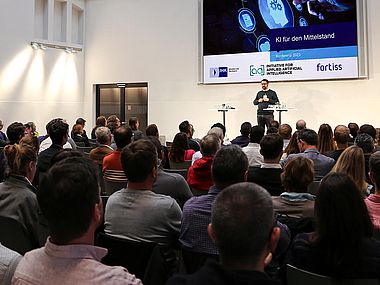
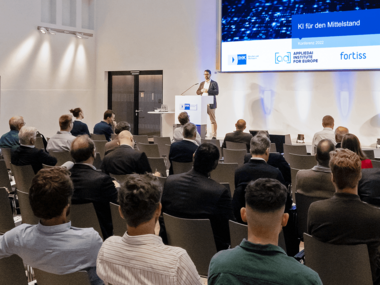
| Together with the IHK für München und Oberbayern (IHK for Munich & Upper Bavaria) and the appliedAI Initiative of UnternehmerTUM, fortiss hosted the successful conference format "KI für den Mittelstand (AI for SMEs)" for the fourth time in a row. This year's networking event took place on October 27 at the IHK premises in Munich, where leading AI experts and users presented their knowledge and experiences with the use of artificial intelligence in Bavarian SMEs.
  • IoT Engineering
Edge Cloud

Towards digital autonomy

| fortiss has recently seen its Horizon Europe CODECO project (COgnitive Decentralised Edge Cloud Orchestration) accepted. Involving a consortium of 16 relevant partners in edge cloud in Europe, CODECO shall develop a highly flexible and adaptive framework for orchestration of edge cloud, based on a novel view for decentralised edge computing.
  • Transfer
fortiss Mittelstand

The German-Baltic Chamber of Commerce visits fortiss

| Within the context of a 2-day delegation trip, member companies of the German-Baltic Chamber of Commerce (AHK) visited the Research Institute of the Free State of Bavaria for software-intensive systems. At the event on September 21, 2022, the fortiss scientists gave a compact insight into the research activities in the field of mobility, artificial intelligence and software development.
  • Transfer
  • AI Engineering
fortiss research fellows

New AG dual leadership at platform Lernende Systeme

| fortiss Research Fellow Prof. Dr. Ute Schmid joins Volker Tresp, Professor of Machine Learning at Ludwig-Maximilians-Universität Munich, to head the Technologies and Data Science working group at the platform Lernende Systeme.
  • Energy
  • AI Engineering
Project start

AI opens up opportunities for environmental and climate protection

| As part of the funding initiative “AI Lighthouses for the Environment, Climate, Nature and Resources”, Stefan Tidow, State Secretary at the German Federal Ministry for the Environment, Nature Conservation, Nuclear Safety and Consumer Protection (BMUV), presented the grant approvals for eight innovative AI projects at the beginning of July. fortiss research associate Alexander Sagel was on hand to accept the grant for the AI lighthouse project AuSeSol-AI during ceremonies at the ministry. The project, which is related to the sustainable energy generation sector, was selected from a total of 300 ideas that were submitted.
  • Transfer
fortiss Mittelstand

Digitalization: the key to more sustainability

| Under this motto, the Mittelstand-Digital Zentrums Augsburg (center for digitalization for small-to-medium enterprises) celebrated its kick-off on Thursday, July 7 at the Technical University Munich campus in Garching. The center supports the digitalization efforts of small-to-medium enterprises and skilled craft and trade businesses in Bavaria. fortiss, which plays an integral part in the center, was on hand in Garching to participate in the festivities.
  • IoT Engineering
Conasense Symposium 2022

The interdisciplinary vision for 6G

| The 12th International CONASENSE Symposium was held on June 27/28, 2022, an event that was organized by fortiss and the Centre for Tele Infrastructure (CTIF) at Aarhus University in Denmark. Focusing on the topic of "6G Communications, Services and Sustainability", leading international scientists and industry experts presented the latest research findings on 6G services, communications and the Internet of Things (IoT). Parallel to this event, the EU-IoT IDEAthon/Hackthon 2021/22 was organized by fortiss and UnternehmerTUM Makerspace and conducted in hybrid mode, with a focus on “mobile sustainable IoT solutions”.
  • Transfer
Opening of the fortiss Labs

Making future issues tangible – here and now

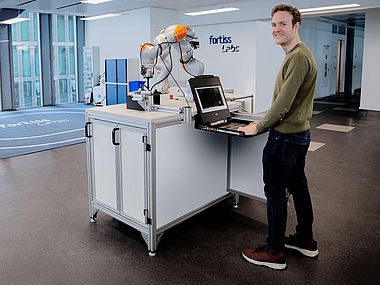
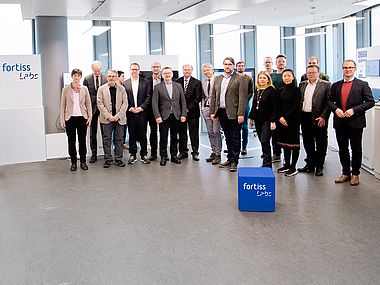
| The fortiss Labs, which are located on the 15th floor of the Munich Highlight Towers, are the new starting point for the targeted transfer of research into practice. The Free State of Bavaria Institute for Software-intensive Systems officially opened the labs, with their advanced demonstrators, on Friday, June 24 within the framework of the nationwide Digital Day. Representatives from industry, science and industry associations were on hand to celebrate the event.
  • AI Engineering
Center for AI

Spiking neural units enable efficient event-controlled cameras

| Whether quantum computing, artificial intelligence or deep learning, computer technology is developing at a rapid pace. It can also still learn a lot of things from nature. Nerve systems and the embedded neural networks, as well as the transmission of impulses via nerve cells, are a marvel of dynamics and energy efficiency for example. These properties can be transferred to computer applications with the help of so-called spiking neural networks. An on-going fortiss project that involves so-called event-based cameras, in which spiking neural units developed by IBM are employed, demonstrates the associated advantages. These two technologies, inspired by biology, are building blocks of a rapidly emerging trend in AI: neuromorphic computing, or expressed another way, computing according to neural processes. These technologies will be further explained in this blog post.
  • Transfer
Cooperation

fortiss becomes cooperation partner of BayernLabs

| The opening of BayernLab Starnberg on May 03, 2022 marks the start of an extensive cooperation with fortiss and the modern IT labs that have been set up throughout Bavaria. For the Starnberg site, fortiss will provide an electric heat storage unit and a solar box for the "Energy" theme section there, which will focus on the importance of the energy transition.
  • Energy
  • IoT Engineering
MEMAP

Using digital technologies to design districts sustainably

| Climate change and the energy transition require innovative solutions for sustainable power and heat supply. Increasing electrification, the expansion of decentralized energy generation and rising fluctuations in the grid are pushing the existing supply system to its limits, which can only be overcome with novel solutions. fortiss has therefore developed a digital platform for energy plants together with of the Technical University of Munich, the battery storage manufacturer Fenecon, the building management specialist Sauter, the MSR and GA start-up Holsten Systems, the TGA planning office IBDM and the thematic platform Digitalization in the Energy Sector of Bayern Innovativ and investigated it using the example of Riemerling in the south of Munich. The software environment is used to network different energy plants. The consumption data of individual buildings are recorded in a modern, digital platform, analyzed and optimal control signals are transmitted back to the individual plants or energy management systems.
  • AI Engineering
  • IoT Engineering
  • Software & Systems Engineering
fortiss results

Open source software creates room for innovation

| Whether autonomous driving, machine learning, the Industrial Internet of Things or artificial intelligence, each of these innovative technologies is associated with various open-source tools in numerous applications. fortiss offers a broad portfolio of open-source software for various application domains, thus opening up the opportunity to build on an immense amount of valuable experience from the talented scientists at fortiss.
  • Transfer
fortiss Mittelstand

Study proves: Technology transfer is more important than ever

| The exchange of ideas, knowledge and technologies is a key success factor for Bavaria's innovative capacity. In this context, knowledge and technology transfer between science and industry is of particular importance. The Bayern Innovativ study "Future of Technology Transfer - On Expedition to the Year 2030" shows options for its future design. Philip Frankl from the fortiss Mittelstand team was involved as an expert for the study.
  • Administration
  • Software & Systems Engineering
Bitkom web conference

A pragmatic approach to enterprise architectures

| The Bitkom web conference scheduled for February 9, 2022 is drawing its inspiration from the classic drama! Under the title Enterprise Architectures: A Drama in Five Acts?, the Bitkom working groups Software Engineering & Software Architecture and Digital Design will provide up-to-date presentations on the topic of enterprise architectures. Contributing from fortiss is Peter Kuhn from the Open Data and Information Management field of competence with a presentation on the topic of enterprise architecture management in the public sector.
  • Production
  • Energy
  • IoT Engineering
AIOTI Testbed Catalogue

An open expert system acts as engine of success for IoT in Europe

| The Alliance for Internet of Things Innovation (AIOTI) was created by the European Commission in 2015 with the goal of promoting the introduction of the Internet of Things (IoT), specifically in Europe. The aim is to strengthen dialogue and information sharing between the IoT players in order to create a dynamic IoT ecosystem. The AIOTI Testbed Catalogue provides a further important contribution. The catalogue was coordinated by and created under the leadership of Prof. Rute C. Sofia from fortiss within the framework of the AIOTI IG Testbeds workgroup.
  • IoT Engineering
Whitepaper

Edge Computing - Innovation in real time

| Edge computing is becoming an indispensable key technology for the IoT of the future. The EU-IoT whitepaper "A Vision on Smart, Decentralised Edge Computing Research Directions" offers a compact and comprehensive overview of the various edge computing concepts, the leading edge research directions and an outlook on efforts to standardize edge computing.
  • IoT Engineering
CONASENSE Symposium 2021

On the direct path to 6G

| The CONASENSE Symposium, featuring internationally-renowned guest speakers, was held on October 4th and 5th in Munich. This year’s event provided interesting and promising insights into the development of 6G. Numerous presentations were given that introduced the technological advances and associated challenges between now and the year 2030.
  • Administration
  • IoT Engineering
Award

A smart butler for the administration of tomorrow

| At the “Vater Smart” hackathon organized by IBM and Aperto in early November, scientists from the fortiss Open Data and Information Management (ODIM) field of competence placed second in the categories “Best Pitch” and “Best Customer Experience” during voting at the conclusion of the event. The event was designed specifically for the public sector and provided public administration employees the opportunity to collaborate with IT specialists and scientists to create innovative solutions for digital public administration services.
  • Administration
  • IoT Engineering
Center for AI

AFML - Sharing knowledge without data

| Public administration services struggle under the burden of tedious processes. For good reason, complaining about the slow grind of government agencies has nearly become a national pastime in Germany. However, technological progress has still not completely bypassed German bureaucracy, which is frequently viewed as behind the times. Machine learning technology in particular can help simplify and accelerate processes with data-driven methods. One of the major hurdles is not the algorithms, but more the processing of the required data while complying with guidelines such as the European General Data Protection Regulation. With this in mind, IBM and fortiss are working within the framework of the Center for AI on accountable federated machine learning (AFML) projects, in which data protection guidelines are fastidiously maintained while still creating valid results.
  • Transfer
fortiss Mittelstand

Successful networking event: Digitisation needs role models

| A further building block for an innovative ecosystem and network for artificial intelligence (AI) in the Oberpfalz region was created this past Wednesday with the networking event “Digitalization and Artificial Intelligence for Small-to-Medium Enterprises”. This network in eastern Bavaria, already a successful example of how to practice a partnership, is designed to be a role model beyond regional borders and across all of Bavaria.
  • IoT Engineering
Interview

Top of European research in IIoT

| Prof. Dr. Rute C. Sofia is the Head of the Industrial Internet of Things (IIoT) field of competence at fortiss and a Senior Member of ACM (Association for Computing Machinery for Advancing Computing as a Science & Profession), an IEEE Senior Member, and an N2Women Awards Co-chair. Additionally she was recently elected a Councilor of the ACM Europe Council.
  • Transfer
fortiss whitepaper

Open Calls – Funding for SMEs Made Easy

| In today’s work and business world, digital technologies and know determine the competiveness and future viability of companies. So that small-to-medium enterprises (SMEs) can profitably exploit digitalization’s economic potential, fortiss Mittelstand provides companies the white paper “Open Calls – Funding for SMEs Made Easy”. The recently published paper offers practical guidance to stimulate investments in SMEs through the targeted funding and implementation of innovation projects. The paper furthermore describes the success potential of open call projects for SMEs by means of a series of concrete digital product developments.
  • Transfer
  • AI Engineering
fortiss Mittelstand

AI – long-term growth factor for the Upper Palatinate region

| The Upper Palatinate is one of Bavaria’s best-performing regions and thus occupies a top economic position. Contributing to this is a growing gross domestic product, low unemployment and close economic ties with the neighboring Czech Republic. The strong backbone of this positive development is local small-to-medium enterprises (SMEs), which use their distinctive innovation strength to help create value in the region.
  • IoT Engineering
KI-SusCheck

Sustainable shopping – made easy with AI

| Consumers must make a variety of shopping and eating decisions on a daily basis. And for many customers, the growing discussions regarding sustainable nutrition leads to additional uncertainty. Help is on the way thanks to the “Sustainable Buying Assistant” that is under development with the help of artificial intelligence (AI). fortiss as part of this project, fortiss is working on a web-based personal buying app, which shows the sustainability of a product using an index that provides important consumer information about the origin of foods and how they are cultivated and manufactured.
  • AI Engineering
  • IoT Engineering
  • Software & Systems Engineering
New field of competence

Managing complexity with systems engineering

| The digital transformation is one of the key challenges in many industries and fields of business when it comes to rationalizing and automating internal processes. Customer-individual mass production, for example, requires a high degree of autonomy from production systems in order to meet the increasing complexity of cyberphysical systems and the growing efficiency pressures in a cost-effective way. With this in mind, the new field of competence Knowledge-based Systems Engineering (KBSE) is conducting research into a knowledge-based engineering concept that provides solutions for these requirements.
  • AI Engineering
  • Software & Systems Engineering
Award

Dr. Harald Rueß receives internationally-renowned CAV award

| Dr. Harald Rueß, Scientific Managing Director at fortiss, was honored by the international scientific community with the CAV award in Los Angeles. In the wake of the “Satisfiability Revolution”, together with his colleagues at the Stanford Research Institute Dr. Rueß developed important contributions to the theory and practice of algorithms for solving practical underclasses of Hilbert’s decision problem from 1928.
  • Transfer
  • IoT Engineering
BayernCloud final report

Smart tourism in Bavaria

| Finding undiscovered destinations, day trips minus the traffic jams, tickets direct on your cell phone and museum visits without standing in line – all of these advantages will soon become reality in Bavaria. On the heels of the successful completion of the BayernCloud research project, the green light has been given for further innovations and new business models for the Bavarian tourism industry. fortiss is providing the final project report in the newly-created Center of Competence for Digitalization in Tourism in Waldkirchen.
  • IoT Engineering
Gaia-X

Survey for Gaia-X and Edge computing

| Gaia-X represents the next generation of data infrastructure: an open, transparent and secure digital ecosystem, where data and services can be made available, collated and shared in an environment of trust. The architecture of Gaia-X is based on the principle of decentralisation. Gaia-X is the result of a multitude of individual platforms that all follow a common standard – the Gaia-X standard. Together, we are developing a data infrastructure based on the values of openness, transparency, and trust.
  • Transfer
  • AI Engineering
KI4KMU

The perfect match – SMEs and AI

| Digitalization poses major challenges for the entire small-to-medium (SME) enterprise sector. One of the decisive drivers for successful implementation will be the leading-edge area of artificial intelligence (AI). With its “National Strategy for Artificial Intelligence”, the German government wants to secure and expand Germany’s leading position in the field of AI. The associated funding program KI4KMU – research, development and utilization of AI methods in small-to-medium enterprises – specifically targets this sector.
  • AI Engineering
Award

TUM Start-up Mentor of Excellence Award 2021 for Prof. Dr. Klaus Diepold

| fortiss research fellow Prof. Klaus Diepold and his team have been recognized with the 2021 TUM Start-up Mentor of Excellence Award. The award will be presented for the first time at the Center for Digital Technology and Management (CDTM) and honors outstanding engagement in the transfer of top technology from research to innovative market-ready products, as well as the promotion of talent at the Technical University Munich TUM.
  • Automotive
  • AI Engineering
  • Software & Systems Engineering
Security Engineering for ISO 21434

Thinking about security from the start

| The vision of autonomous driving is constantly drawing ever nearer and apart from major economic success, it promises improved traffic safety. But with the development and implementation of self-driving vehicles at the latest, manufacturers now have to deal with a new challenge that the traditional IT industry has long had to deal with: cyber attacks. The ISO 21434 standard defines the path to more security in the future. With its white paper “Security Engineering for ISO 21434”, fortiss is for the first time providing a practical implementation guideline for engineers in the automobile industry.
  • Energy
  • IoT Engineering
Project closure

Digital - or via fax after all?

| Reusing organic waste materials as opposed to disposing of it was a key goal of the now-completed digital raw materials exchange project co-managed by fortiss and the Center of Competence for Nutrition (KErn). The project partners were searching for a digital way to connect suppliers and customers with one another in order to exchange raw materials. The result of the three-year project was a digital platform that creates an opportunity to structure food production in a more sustainable fashion, take better advantage of the potential of regional structures, more effectively integrate existing know-how and with the help of digitalization to create a more sustainable value chain.
  • AI Engineering
AI Annual Report 2020

Ready for the next generation of artificial intelligence

| Where does research into the development and application of artificial intelligence (AI) stand today? What opportunities and challenges does AI present for industry and society? The AI Engineering @ fortiss 2020 Annual Report provides an up-to-date answer to these and other questions. In the report, you will find a comprehensive overview of the current AI research activities at fortiss, the research institute of the Free State of Bavaria for software-intensive systems and services
  • IoT Engineering
GAIA-X

European data and cloud sovereignty made in Bavaria

| Sending a strong signal, the European Union is setting out to build a sovereign, federal data infrastructure. Referred to as GAIA-X, the project, which involves numerous European representatives from industry, science and public administration, will serve as the development of a high-performance, competitive, secure and trustworthy digital ecosystem for Europe. fortiss is a Day-1 Member and contributes significantly to the goals of the initiative with its expertise in the field of intelligent infrastructures.
  • AI Engineering
Interview

IBM and fortiss - a successful cooperation for a reliable AI

| The Research Institute of the Free State of Bavaria for software-intensive systems fortiss and the technology company IBM established the Center for AI exactly two years ago to develop safe AI methods for business and society. In the meantime, the experts from IBM and the scientists from fortiss have successfully implemented several AI research projects. The focus of the cooperation has always been the question: "When is an AI reliable and how can users understand how or why an AI makes decisions?" Dr. Holger Pfeifer, Competence Area Manager Software Dependability at fortiss, coordinates the Center for AI and is a specialist in Robust AI. In the following interview, he reports on the successful collaboration with an international technology leader and the significant progress made in the past two years.
  • IoT Engineering
fortiss short study

Digital cities with intelligent designs

| There are numerous concepts for the “intelligent, clever city,” all of which in theory are linked to the same vision: creating a connected and sustainable environment that centers on the quality of life of the residents. Infrastructure, energy supply, mobility, information and communication all play a key role in the implementation, as do the digital technologies that are used to help implement these services.
  • Transfer
fortiss whitepaper

Successfully implementing a digitalization strategy in SMEs

| Digitalization is a megatrend and a key to the Bavarian industry’s ability to innovate and compete. With small-to-medium enterprises however, there is a considerable amount of uncertainty regarding the opportunities and risks associated with digitalization. With this in mind, fortiss and the Technical University Munich collaborated on a white paper titled “QuickCheck Digitalization – Digital Transformation in Bavarian Companies” that outlines the current status of digitalization and identifies problem areas in order to derive targeted recommendations for a digitalization strategy.
  • Administration
  • IoT Engineering
fortiss short study

Digital public administration in tip-top shape

| The digitalization of public administration services, which is in full swing, is one of the key projects of the German government. Within the framework of the implementation of the German Online Access law (OZG), the current focus is on further digitalization of the communication between government administrative offices and users. The idea is to make public administration services not only more digital, but more user-friendly.
  • Production
  • IoT Engineering
fortiss memberships

Launch of the VDMA AG Wireless Communication for Machines

| The German Association of Mechanical and Plant Engineering (VDMA) created the working group Wireless Communications for Machines (AG WCM) on March 1, 2021. As a founding member, fortiss wants to make a significant contribution toward supporting the integration of wireless communications in industrial IoT environments. This working group will form the basis for the creation of cooperation with the production industry, making it possible for fortiss to better coordinate the development concepts in line with the requirements of real production environments.
  • Administration
  • IoT Engineering
Center for AI

Proactive public administration: let the bureaucracy work for you

| “As of 2022, everything here will be digital.” Is that a sentence that would be hard to imagine coming from a government representative these days? At the moment, perhaps not yet, but the regulation with the bulky name “Federal Act to Improve Online Access to Administrative Services”, which also goes by the German acronym OZG, can help. If the researchers from IBM and fortiss, the independent, Free State of Bavaria research institute for software-intensive systems, have their way however, that’s not all. The two partners are already working together on a solution for proactive public administration services, in which the process is not only digital, but is even initiated proactively. Beginning to sound exciting, right?
  • IoT Engineering
BEST

Blockchain technology – an opportunity for the energy transition

| At the end of January a virtual kick-off meeting was held for the research project "BEST - Blockchain-based decentralized energy market design and management structures". fortiss and its consortium partners are conducting research into how the blockchain technology can best be implemented for energy trading within the framework of the energy transition. The consortium project, which is scheduled to run for three years and includes participants from the research and the energy industry is being funded by the German Federal Ministry for Economic Affairs and Energy. Represented by the Human-centered Engineering field of competence, among other activities fortiss is developing a personalised prognosis model for future energy consumption through the utilization of machine learning (ML) technology.
  • Transfer
  • AI Engineering
BayernLab Online

The Influence of Artificial Intelligence on Fake News and Deep Fakes

| Most of us are meanwhile familiar with fake news. Using artificial intelligence (AI) and deep learning however, not only images but also video and sound can be manipulated so that these “deep fake” videos appear authentic. As a result, politicians end up making false statements or celebrities have their faces superimposed in pornographic videos – or so it seems.
  • Transfer
  • AI Engineering
TUM Venture Labs

Key technologies offer opportunities for founders

| The innovation centers TUM Venture Labs at Technical University Munich promote high-tech innovation and technology-based spin-offs at the interfaces of engineering, natural and life sciences, AI/IT and medicine. Their service offerings include start-up support, networking events, and a variety of educational opportunities. As part of a 4-day educational webinar, fortiss successfully contributed its expertise in the field of Machine Learning to the initiative.
  • Transfer
  • AI Engineering
FarmExpert 4.0

Agriculture in the digital age

| Thanks to more complex legal frameworks and numerous exceptions to the rules that make farming operations increasingly more time consuming, Bavarian farmers and their consultants are facing major challenges. With the aim of enabling more efficient and cost-effective farming operations, an independent, digitally-supporting agriculture consulting platform was developed as part of the FarmExpert 4.0 research project.
  • Automotive
  • IoT Engineering
Providentia++

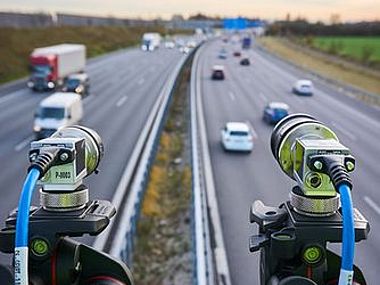
The digital twin is the foundation of the highway of the future

| Scientists around the world are urgently conducting research into the vehicle traffic system of the future. After all, connected and autonomous driving has the potential to make mobility significantly safer and more reliable. Studies that examine better ways to provide real-time information to drivers, assistance systems, self-driving vehicles and road infrastructure operators are serving as the foundation for this research. With the aim of safeguarding interaction between the participating systems in the near future, fortiss is collaborating with research and industry partners as part of the Providential++ consortium project to establish the required digital infrastructure.
  • AI Engineering
Neurorobotics Platform

Software modeled on the brain

| The Human Brain Project (HBP), currently one of largest research projects in Europe, was created to develop a unique European technology platform for neurosciences, medicine and advanced information and communications technologies.
  • Production
  • AI Engineering
  • IoT Engineering
Center for AI

Robots for small-batch production: digital twins create opportunities

| Whenever we think about manufacturing companies, in most cases we imagine enormous production halls where the same mass-produced articles roll off the line. Working side-by-side on the production line, robots and humans manufacture products of every type and size, and in record time. Nothing could be farther from the truth however. According to a VDMA study, 73 percent of all manufacturers actually focus on single- or small-batch production, a trend that is on the rise. And when it comes to these companies, which are often small-to-medium enterprises, the reality appears a bit different given that the use of industrial robots rarely pays off in these environments. Help could be on the way in the form of digital twins for robots under joint development by IBM and fortiss.
  • Energy
  • IoT Engineering
Research cooperation

Research for the climate

| Following China and Japan’s example, South Korea is making a commitment to climate neutrality. At the end of October, South Korean President Moon Jae-in announced the country desire to reduce net CO2 emissions to zero by 2050. On the way there, it wants to work more closely with research institutes and cooperate on an international basis.
  • AI Engineering
DKE standardization rule for AI

fortiss and DKE develop first security standard for AI-systems

|
  • AI Engineering
Interview

Artificial intelligence - for sure! AI quality is now verifiable

| Fighting myths with standards: Making artificial intelligence verifiably safe is a prerequisite for consumer and industry trustworthiness. With the development of such a standard, the German Commission on Electronics and Information Technology (DKE), with the involvement of the fortiss, the research institute of the Free State of Bavaria for software-intensive systems, has managed to create a breakthrough. Under the leadership of fortiss, which also contributed to the content, the development of the VDE-AR-E 2842-61 standard represents an initial, detailed framework for the “design and trustworthiness of autonomous/cognitive systems.” Four volumes have already been completed, with plans to release the last two in the first quarter of 2021. The publication of the standard paves the international way for the structured and verifiably safe development of AI-based systems, thus establishing the availability of a reference standard that can lead to an AI seal of quality. fortiss software experts Harald Rueß und Henrik Putzer believe there is cause for concern if we fail to create standards. In an interview the Munich scientists, who played a leading role in the development of the new standard, talk about the demands and reality of a technology that is surrounded by an abundance of myths.
  • IoT Engineering
Kick-off meeting

EU-IoT helps to shape a digital Europe

| Apart from other leading-edge technologies such as artificial intelligence (AI), 5G and cloud computing, for Europe the Internet of Things (IoT) is making an important contribution toward achieving the goals of the European data strategy, economic stimulus plan and green deal. In order to come one step close to this project, a virtual kick-off meeting was held on October 22, 2020 to officially launch the EU-IoT project.
  • Transfer
fortiss Mittelstand

The Upper Palatinate offers excellent opportunities for research

| Oberpfalz (Upper Palatinate) is one of Germany’s most dynamic business regions. The EU’s eastward expansion provided the region a significant impulse that led to positive economic development. With a focus on industries such as machine engineering, electronics, mechatronics, automotive, plastics, IT security, sensor technology, bioengineering and genetic engineering, the region is well-positioned for the future.
  • AI Engineering
Award

Prof. Dr. Ute Schmid receives the 2020 Rainer Markgraf Award

|
  • Administration
  • IoT Engineering
Digital civic participation

The smart city of tomorrow is taking shape

|
  • Production
  • AI Engineering
Council discussion

Artificial intelligence in industry - today and tomorrow

|
  • IoT Engineering
fortiss in Europe

European strategy paper for the Internet of the future published

|
  • Transfer
  • Production
  • Software & Systems Engineering
fortiss Mittelstand

The trades industry goes digital

|
  • Production
  • Automotive
  • Software & Systems Engineering
Project closure CrESt

Solutions and models for complex challenges

|
  • Administration
  • IoT Engineering
Smart Villages

Europe’s future depends on intelligently-connected villages

|
  • AI Engineering
  • IoT Engineering
  • Software & Systems Engineering
New research fellows appointed

Bundled expertise for research and young scientists

|
  • IoT Engineering
  • Software & Systems Engineering
Cyber-physical systems

HUBCAP is a driving force for digital innovation

| fortiss has been a partner in the HUBCAP European alliance project since early 2020. The network serves as the central starting point for digital innovations using model-based design technologies for cyber-physical systems (CPS). The alliance also develops and promotes a sustainable network of experts for small-to-medium enterprises (SMEs) and digital innovation hubs (DIH).
  • Transfer
  • Production
  • Automotive
Big Data Guideline

Big data for small-to-medium enterprises made easy

|
  • AI Engineering
Project Closure

Stress test for firefighters

| Firefighters work under immense pressure when responding to a call. Extreme heat, smoke that obstructs vision, time pressure and danger are all factors under which they have to react. The stress created by such situations affects the ability to react, both physically and mentally, potentially having a serious impact on the cognitive capabilities. Those affected are often unaware of their limited ability to judge, which can have fatal consequences since every mistake can cost your own or someone else’s life.
  • Transfer
  • IoT Engineering
  • Software & Systems Engineering
BayernCloud

Digital solutions for the bavarian tourism sector

|
  • Software & Systems Engineering
Award

Awards for the best teaching and the best doctoral student supervision

|
  • Automotive
  • AI Engineering
  • Software & Systems Engineering
Best Paper Award

Research for the car of the future

|
  • AI Engineering
Project start

fortiss becomes a partner of the European research initiative

| Numerous European research centers, universities, and industry representatives have joined forces in the AI research initiative "HumanE AI" to pool existing knowledge and expertise in the field of Artificial Intelligence (AI). fortiss will contribute to this pan-European collaborative project with its expertise in the field of Human-Centered Engineering.
  • Transfer
  • Software & Systems Engineering
fortiss whitepaper

Advanced Systems Engineering - The systems of the future

|
  • AI Engineering
  • IoT Engineering
  • Software & Systems Engineering
Safety and Security

Cybersecurity reinvented

|
  • Transfer
  • Software & Systems Engineering
fortiss whitepaper

Software Eats the world

|
  • Transfer
  • Aerospace
  • Automotive
  • Software & Systems Engineering
fortiss whitepaper

Application-based introduction of model-based systems engineering

|
  • AI Engineering
  • Software & Systems Engineering
Interview

Translating formal explanations into natural language

|
  • AI Engineering
Neuromorphic IT systems

Pulses instead of zeroes and ones

|
  • Energy
  • IoT Engineering
Smart Solar Box for India

Environmentally friendly air conditioning of classrooms

|
  • AI Engineering
Interview

Learning data minimization

|
  • Transfer
  • Software & Systems Engineering
fortiss whitepaper

Software is the new core competence

|
  • AI Engineering
  • IoT Engineering
  • Software & Systems Engineering
New research fellows appointed

fortiss further expands its scientific expertise

|
  • Administration
  • IoT Engineering
  • Software & Systems Engineering
Digital Public Services

Applying for the family allowance with one click

|
  • Transfer
  • Administration
eGovernment MONITOR 2019

Digital services are being used – but there is some catching up to do

|
  • AI Engineering
  • IoT Engineering
  • Software & Systems Engineering
Bitkom meets at fortiss

Experts discuss open data formats and AI in service ecosystems

|
  • Administration
  • IoT Engineering
Creative Bureaucracy Festival

User-friendly forms are good - no forms are better!

|
  • Software & Systems Engineering
MoDELS 2019 Specialist Conference

Using models to develop complex software systems

|
  • Transfer
  • Software & Systems Engineering
Interview

Creating socially compatible technology

|
  • Transfer
  • AI Engineering
  • IoT Engineering
  • Software & Systems Engineering
Science for Breakfast

Live experience of safe AI applications

|
  • Transfer
  • Production
1st Hackathon for the trade

Looking for smart minds for digital solutions in the craft sector

|
  • Transfer
  • AI Engineering
Council discussion

From Fake News to Deep Fake

|
  • AI Engineering
Dependable Artificial Intelligence

Securing self-learning systems

|
  • Transfer
  • AI Engineering
  • Software & Systems Engineering
Interview

Simply try out new technologies in small projects

|
  • AI Engineering
Center for AI

IBM and fortiss establish Center for AI Research

|
  • Transfer
  • AI Engineering
Center for Applied AI

Conference: "AI for SMEs"

|
  • AI Engineering
Artificial Intelligence

Detecting Deep Fakes

|
  • Automotive
  • IoT Engineering
  • Software & Systems Engineering
Better traffic flows

Safe, connected driving on the digitally-supported highway

|
  • Administration
eGovernment-MONITOR 2018

Germans do not use digital administration services

|
  • Transfer
  • AI Engineering
Artificial Intelligence

Bavarian AI Center opens

|
  • IoT Engineering
  • Software & Systems Engineering
BayernCloud

Allgäu: model region for digital tourism services

|
  • Production
  • IoT Engineering
  • Software & Systems Engineering
Industry 4.0

Esperanto for machine components

|
  • Software & Systems Engineering
Interview

Software must be flexible, reliable and durable

|
  • Energy
  • IoT Engineering
Safe energy supply

A stabile grid for Kerala, India

|
  • Automotive
  • IoT Engineering
  • Software & Systems Engineering
Autonomous driving and AI

SAT1 Bayern broadcasts documentary with fortiss team

| fortiss researches develop a virtual test platform for real traffic scenarios. (Image: BavariaOne) Exciting things are happening on the A9 highway near Munich-Garching. Our Providentia team is installing the sensor technology for the infrastructure that will enable real-time monitoring of the road situation.
  • Automotive
  • AI Engineering
  • IoT Engineering
  • Software & Systems Engineering
Optimal traffic flow

When sensor data and mobility infrastructures interact

| Why not analyze measurement data from automobiles, mobility infrastructures and mobile phones and use it for autonomous driving? Precisely this idea is being implemented by SADA (smart adaptive data aggregation), a joint project involving fortiss. The results of the project flowed into the development of “EO smart connecting car 2”, a robotics-based electric car. The demonstrator can be viewed during the Hannover Trade Fair (April 23-27).
  • Energy
  • IoT Engineering
Integrated energy

fortiss forms Open District Hub with partners

|
  • Transfer
  • AI Engineering
Digital revolution

How intelligent is Artificial Intelligence?

| What does the term artificial intelligence (AI) actually mean? And can a machine replace human skills? Anyone expecting clear answers to these questions should consider reading "Artificial Intelligence – Opportunities for Business and Society in Bavaria", a white paper published by fortiss.
  • Production
  • IoT Engineering
  • Software & Systems Engineering
Artificial Intelligence

The self-configuring factory

| In an age of globalised markets, the production industry must react quickly and efficiently to shifts in demand. Future production systems must therefore be flexible and easy to combine.
  • AI Engineering
Artificial Intelligence

Robots with brains

| fortiss has developed a new simulator for the "Human Brain Project", enabling neuroscientists to "transplant" their brain models into virtual robots.
  • IoT Engineering
  • Software & Systems Engineering
Cyber-physical systems

Professorship for fortiss scientist

| The Johannes Kepler University in Linz (Austria) has appointed Alois Zoitl, Head of Industrial Automation at fortiss, as Professor of Cyber-Physical Systems. The fortiss scientist will be working with other colleagues at the new interdisciplinary Open Innovation Center of the Linz Institute of Technology (LIT) on future factory research. This will include a study of the effects of industry 4.0 on work and society.
  • IoT Engineering
  • Software & Systems Engineering
BayernCloud

Minister of Economic Affairs Aigner awards grant

| fortiss, the research institute of the Free State of Bavaria for software-intensive systems and services, is receiving project funding of 2.1 million EUR from the State of Bavaria to design and test the "Bayern-Cloud". The focus of the project is a digital platform for small and mid-sized businesses in Bavaria, which lack both the necessary expertise and resources to use cloud solutions.
  • Production
  • IoT Engineering
Industry 4.0

Data flow without media interruption

|
  • AI Engineering
Center for AI

Preventing water damage with machine learning algorithms

| Water damage can become costly in short order, as happened in the Highlight Towers in Munich when a ruptured water line in the 21st floor of the IBM Watson Center was first discovered early Monday morning. Icy temperatures over the weekend led to a frozen water pipe that eventually burst. Of all places, it was the client center with the most expensive hardware in the floor below that was impacted. The fully-booked customer event facility, equipped with sensitive technology worth several million euros, could not be utilized for a period of six weeks. One thing was obvious to everyone: this type of incident could never happen again. For this reason fortiss and IBM worked together to develop a prototype of a novel sensor with machine learning algorithms.

Subscribe to our newsletter

Teaser image fortiss newsletter
fortiss Newsletter

Stay up to date!

Stay up to date on the latest news about research and innovation, events and technology transfer opportunities, as well as career opportunities.
click to return to top of page