



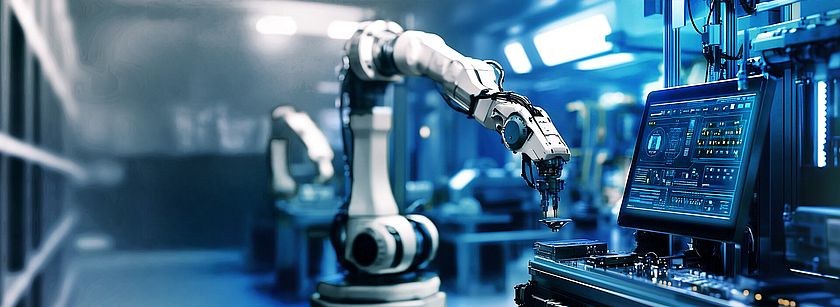
Smart manufacturing solutions for modern industrial processes
fortiss shapes the future of industrial technology by developing flexible and intelligent production solutions to ensure sustainable competitiveness for companies in a dynamic market environment. Our interdisciplinary approach combines cutting-edge research with practical engineering to realize innovative and future-proof systems for industrial applications.
By addressing current challenges in the production industry, such as resource scarcity and changing market demands, we enable companies to increase efficiency, flexibility, and resilience. Whether through advanced automation, intelligent system integration, or collaborative robotics – fortiss is a driving force for the next generation of industrial innovations.

Research expertise in industrial production
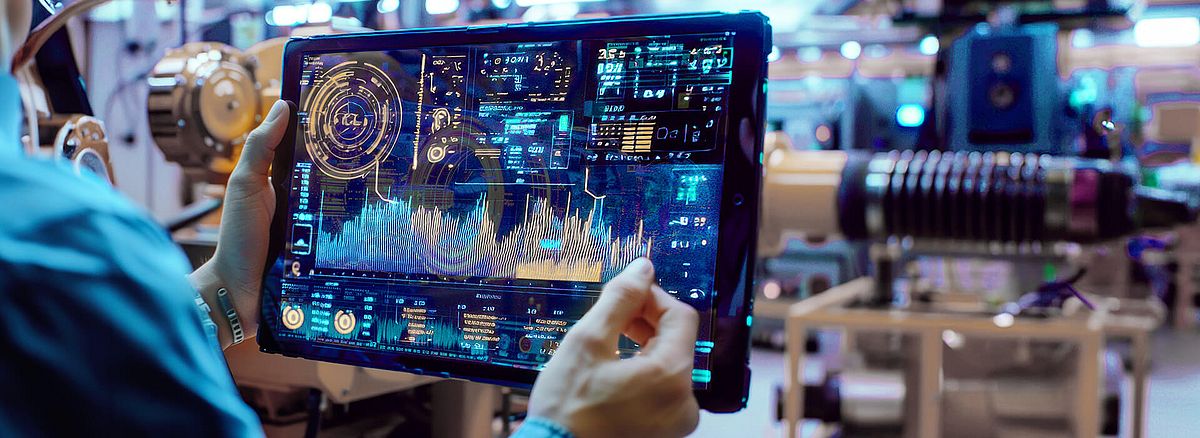
Comprehensive solutions for advanced production

Resilient production with seamless data integration
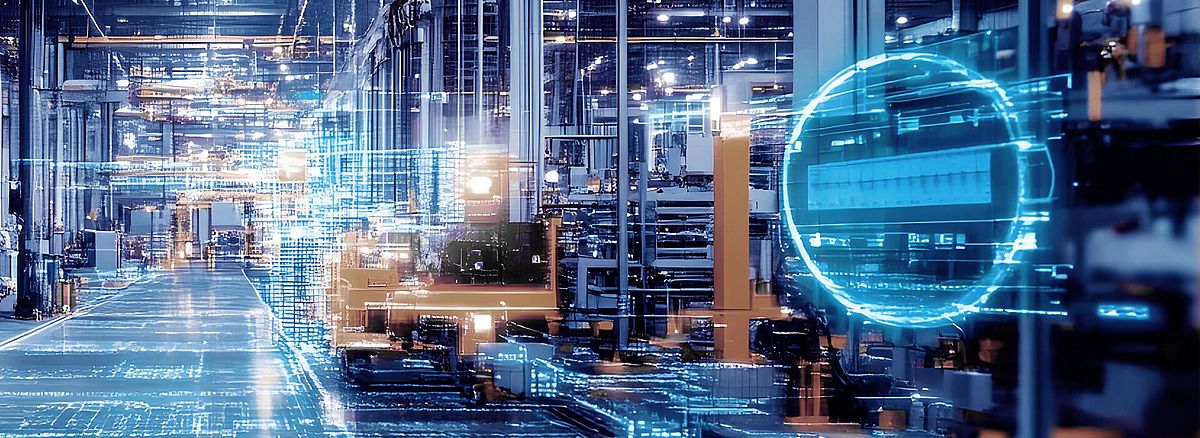
Flexible and adaptive production systems
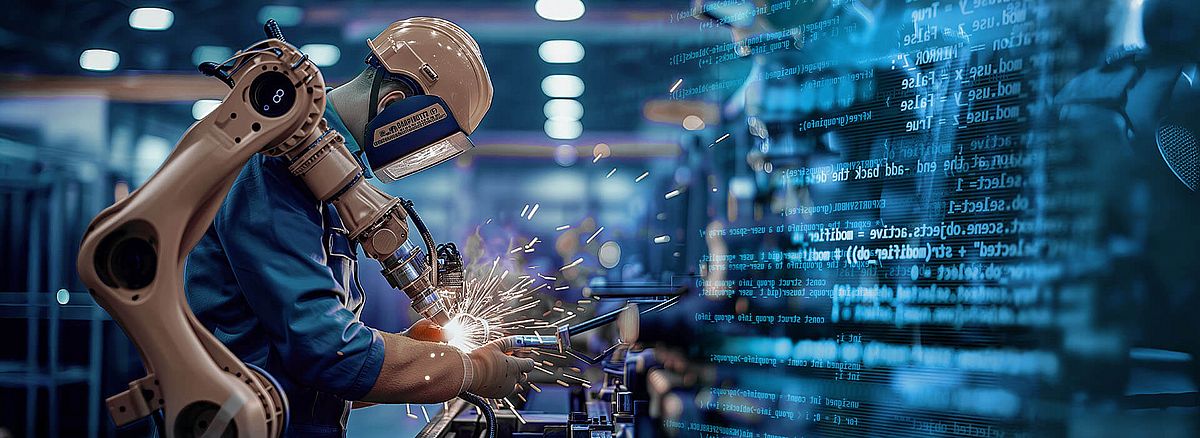
Integrated human-robot collaboration in production
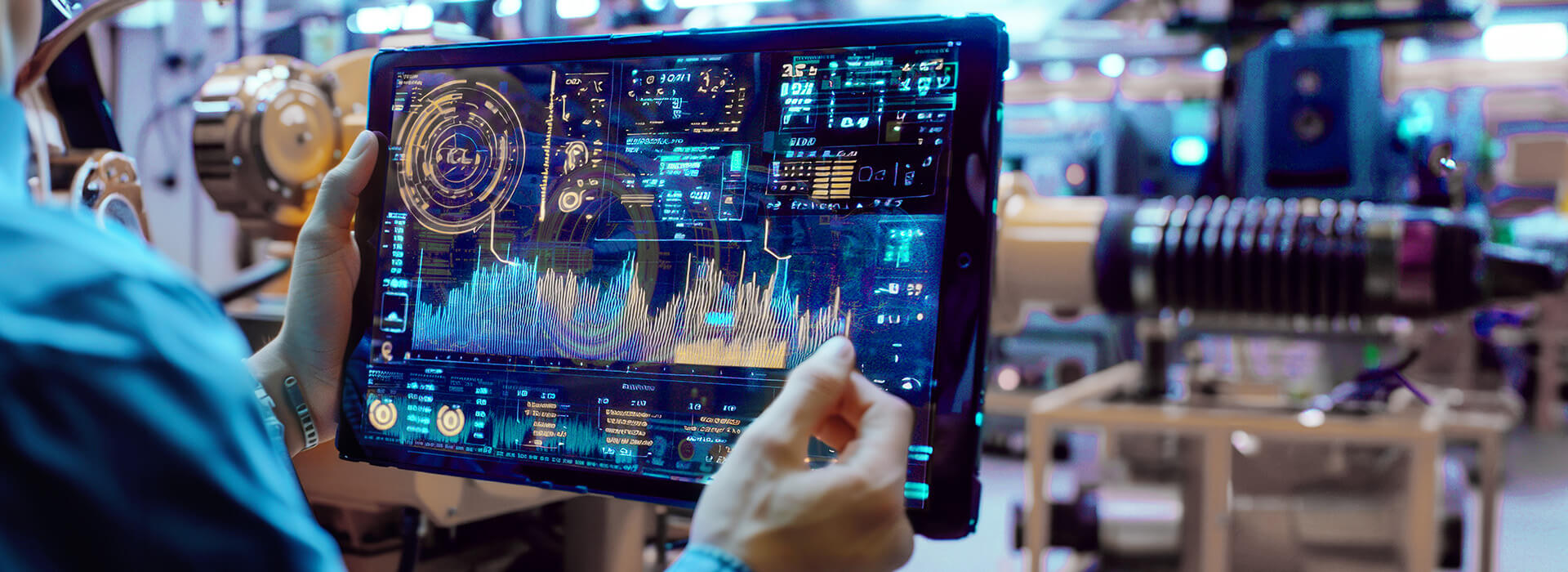
Comprehensive solutions for advanced production
Machine learning and knowledge representation are transforming production by enabling data-driven analytics and automated systems, thereby improving efficiency, flexibility, and quality.
Competencies
-
Comprehensive coverage of all development phases – from requirements and modeling to implementation, analysis, and testing – ensuring adherence to stringent industry standards, supported by structured approaches such as Advanced Product Quality Planning (APQP) to ensure quality and efficiency criteria are met.
-
Technical assistance systems integrate design, engineering, and production, leveraging semantic interoperability for efficient data exchange, streamlined workflows, and real-time decision-making across the product lifecycle.
-
By combining simulated tests with real production data, we create a realistic testing environment. This technology enables precise fault detection, optimization of production workflows, and maximization of system efficiency.
-
Digital twin technology enables simulations and the exchange of relevant production data. It supports the optimization of production processes, shortens iteration cycles, and enhances precision in planning, control, and development within production.
-
Building on the optimization capabilities of Digital Twin technology, which enables simulations and data exchange for production processes, research combining semantic knowledge and machine learning enhances automated production. This integration allows for flexible task deployment, autonomous operation, and KPI evaluation, ensuring reduced downtime and optimized workflows.
-
Creation of complex scenario-based test cases using advanced algorithms, machine learning and model-based techniques to dynamically generate comprehensive production test cases.
-
Edge computing and AI minimize latency, deliver real-time insights, and enable adaptive, data-driven decisions. Context-aware systems enhance transparency and responsiveness to changes in dynamic production environments.
-
Advanced Machine Leanring and semantic knowledge is combined to analyze process data in real time to identify patterns and predict failures, enabling proactive maintenance and optimizing workflows for efficient, uninterrupted production.
-
Advanced data integration and real-time analytics unlock enterprise data’s potential, enabling predictive decisions, system connectivity, and adaptive production workflows to enhance robustness and responsiveness.
Reference projects
AI-powered anomaly detection using intelligent digital twins
System architecture for the fourth industrial revolution
European connected factory platform for agile manufacturing
Insights

Connecting smart factories across Europe
Digital twins as the key to the production of tomorrow
Managing complex software ecosystems in industrial automation

Resilient production with seamless data integration
Centralized data infrastructures connect production systems, boost efficiency and agility, and enable automated processes – from production orders to robot programming.
Competencies
-
Centralizing data across heterogeneous systems ensures cross-system interoperability and decision-making, eliminating process interruptions. Data integration frameworks support dynamic optimization, predictive analysis, and efficient resource allocation for timely, informed decisions.
-
Automated tools support agile development while ensuring compliance with security and regulatory standards, enabling secure, reliable software systems in fast-paced innovation cycles. This approach balances flexibility, speed, and robust security for dynamic manufacturing environments.
-
Providing production planners with the tools to monitor, analyze, and optimize workflows in real time. These insights enable rapid adjustments to changing conditions, support agile decision-making, and ensure sustained operational efficiency in dynamic production environments.
-
Autonomous production systems use real-time analytics and AI to monitor, adapt, and optimize production. They ensure seamless operations by responding to market demands, minimizing disruptions, and driving continuous improvement for future-ready environments.
-
Advanced data integration and real-time analytics unlock production data’s potential, enabling smarter decision-making, enhanced connectivity, and adaptable, resilient systems for efficient, future-ready production.
-
Modular, scalable systems integrate RAG for intuitive interaction with heterogeneous data sources on historical and real-time process data, allowing operators to query system states, identify and resolve errors, and aid innovation and decision-making processes.
Reference projects

Accountable Security Claims for Industrial Edge Applications
Data infrastructure for continuous production without system interruptions
Improved production planning and coordination through platform ecosystems
Insights
Driving smart, real-time support in product development
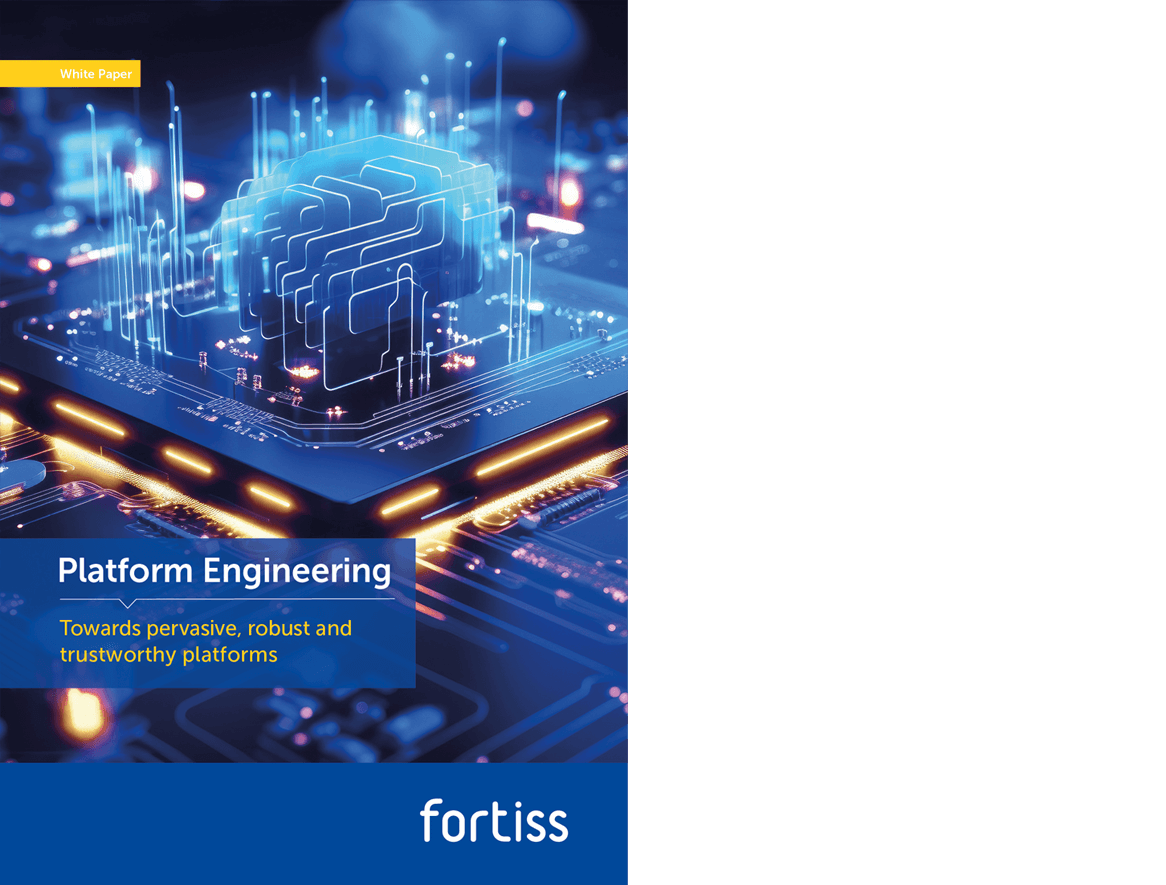
Towards pervasive, robust and trustworthy platforms
Flexible and adaptive production systems
Flexible, adaptive production systems integrate legacy and modern technologies, increase automation and autonomy, and enable efficient, scalable, and reliable production through real-time data.
Competencies
-
Integrating legacy systems with IoT, AI, and real-time monitoring enhances efficiency and decision-making. Using semantic interoperability, OPC UA, and Mendix, legacy infrastructures connect with modern systems, unlocking the potential of existing assets.
-
Development of standardized interfaces and flexible architectures for the dynamic integration of new sensors. Creating information models for seamless sensor data exchange ensures efficient, adaptable integration into existing systems, enhancing real-time monitoring and operational efficiency.
-
Leveraging AI for advanced object detection and pose estimation, recognition of human collaborators and their activities, and gesture recognition. These capabilities improve safety and interaction in manufacturing environments by enabling intelligent responses to dynamic conditions and human-machine cooperation.
-
Real-time monitoring enhances precision and operational insights. By focusing on semantic interoperability, these solutions ensure seamless data integration, automatic data segmentation and interpretation, and support cross-functional collaboration. As a result, data-driven decision-making is enabled, process accuracy is improved, and errors are minimized.
-
Utilizing formal knowledge models combined with data-driven anomaly detection and error classification models to enable production systems to respond flexibly to faults. This approach minimizes downtime and enhances production security by addressing external influences and compensating for unforeseen events.
-
Enabling autonomous production of multi-variant configurations, with the capability to automatically analyse and adjust production systems for customized single-unit orders. This approach enhances flexibility in production lines, allowing for efficient management of diverse product variants while ensuring high-quality, individualized production.
Reference projects
Lightning-Fast Event-Based Object Tracking for Automated Logistics
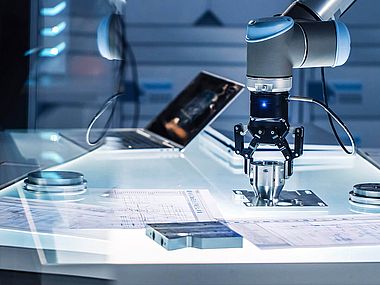
Industrial robots see with neuromorphic eyes
Insights
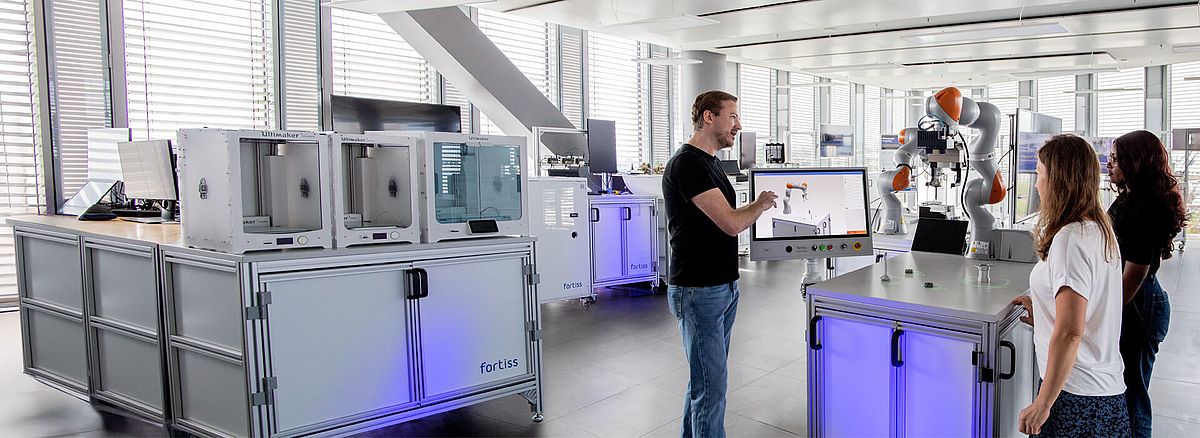
Flexible und intelligent production for small batches

Sustainable production starts with intelligent solutions
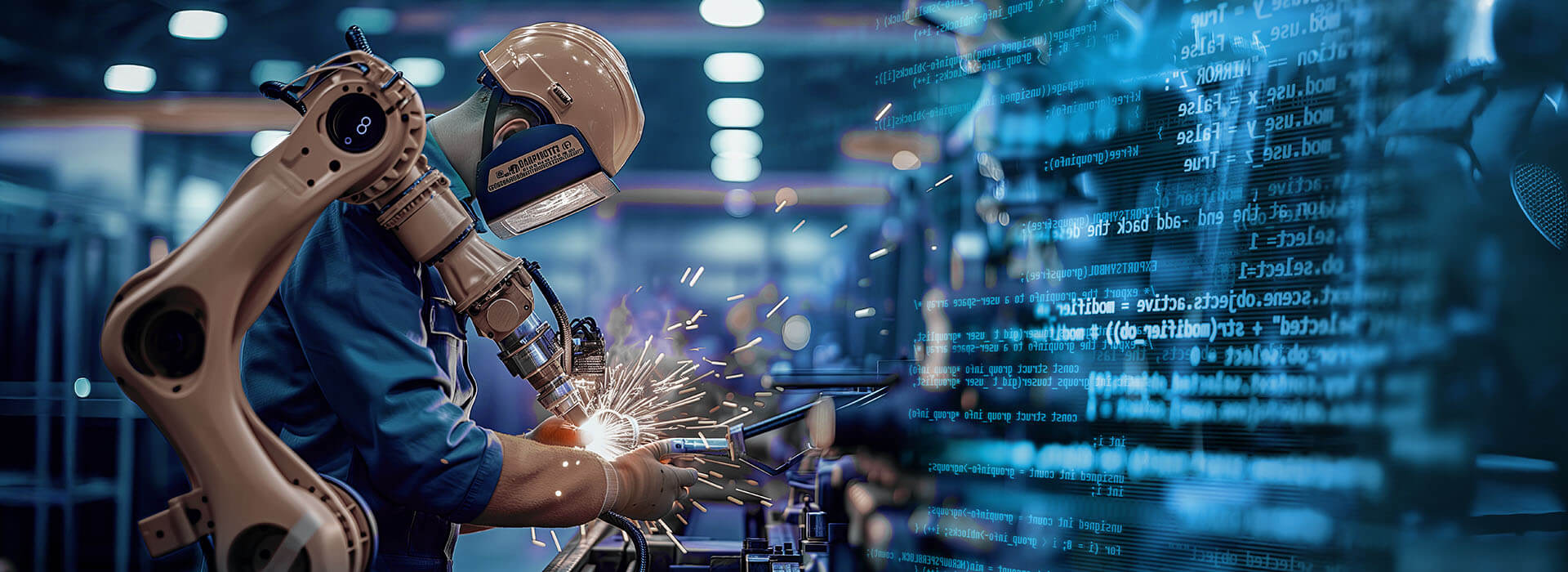
Integrated human-robot collaboration in production
Collaborative systems in production take a human-centered approach and bridge the gap between people and machines. They enhance productivity, safety, and flexibility through scalable, modular infrastructures.
Competencies
-
Research on industrial robot systems using semantic process descriptions enables financially viable automation of small-lot production. Advanced semantic technologies enhance usability, accuracy, and flexibility, enabling efficient, adaptable, and innovative human-robot collaboration for agile manufacturing.
-
This technology enables robots to learn from human actions through observing demonstrations of tasks, simplifying programming and enhancing worker involvement. It streamlines automation integration in flexible production, fostering collaboration and upskilling.
Reference projects
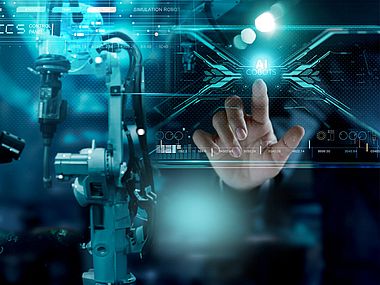
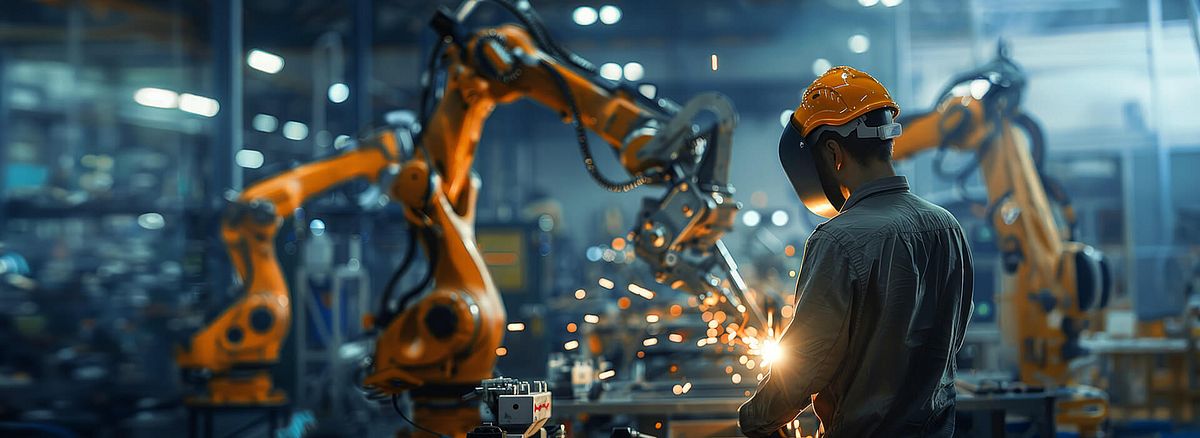
Collaborative welding robots with human gesture interaction
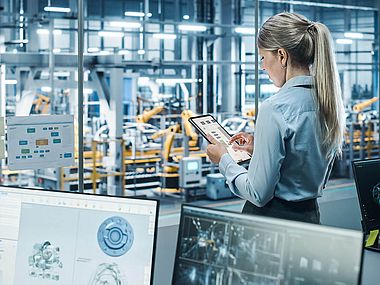
Digital product development process with learning assistance system
Insights

Automated risk management as a key to competitiveness
Innovative impulses for automation and human-robot collaboration
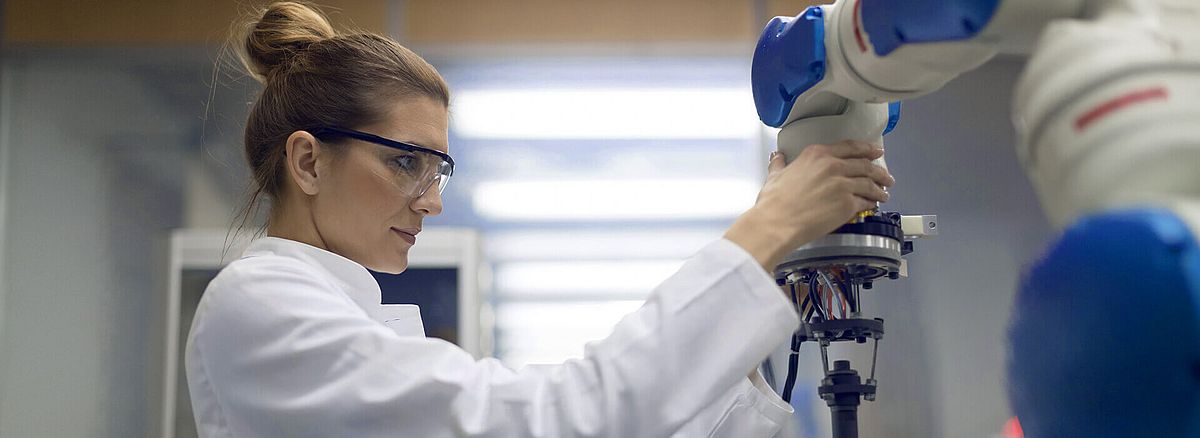
Control system for safe, flexible and efficient human-robot collaboration
At a glance

Services for industry

Your innovation starts with fortiss

Applications in industrie
Please contact us!
fortiss – Your innovation partner for the manufacturing sector
- Latest Scientific Insights
Access to cutting-edge research and practical developments in production systems and automation. - Cross-Industry Solutions
Expertise in integrating IoT, digitalization, and automation for efficient, flexible, and sustainable manufacturing processes. - Reliable Engineering Expertise
Development of flexible and efficient production systems that seamlessly integrate into existing infrastructures and drive process optimization. - Future-Oriented Approach
Focus on Industry 4.0, sustainability, resource efficiency, and cost reduction to enhance competitiveness in manufacturing.