


Focus topic Automotive

Digital engineering for software and systems in the automotive industry

Research expertise for the automotive industry

fortiss is shaping the future of automotive software technology, transforming tomorrow's mobility into a safer, smarter, and more efficient experience. We achieve this by supporting our partners with cutting-edge scientific insights and reliable engineering expertise. As an innovation hub for the automotive industry, fortiss delivers efficient, well-founded solutions that meet today’s demanding software development needs.

Our agile approach bridges the gap between rigorous scientific research and the fast-paced demands of the market. In an industry often constrained by budgets and resources, fortiss provides state-of-the-art R&D capabilities that many companies would otherwise struggle to achieve on their own.

Specialized expertise in automotive use cases

Use Case

Pioneering autonomous driving functions

Use Case

Connected mobility services and intelligent transport infrastructure

Use Case

Safe and user-friendly human-machine interaction

Use Case

Digitalization and automation in automotive production

Use Case

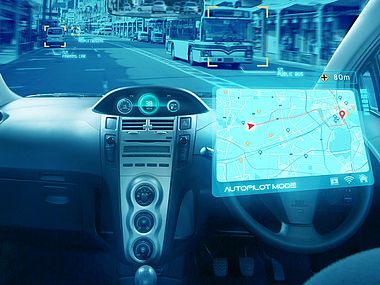
Pioneering autonomous driving functions

Modern autonomous driving systems use algorithms and AI to navigate with precision, make quick decisions, and respond reliably—enhancing safety and efficiency.

Competencies

Comprehensive coverage of all phases of system development, from requirements and modeling to implementation and testing, to meet the stringent safety standards of the automotive industry.

Integration of sensor data into a unified real-time environment model to support driving decisions through sensor and data fusion. Development of advanced systems using neural networks to enhance vehicle safety and intelligence.

Implementation of advanced systems and formal methods to ensure the reliability and safety of vehicle technologies through rigorous testing and validation procedures. This includes automated and continuous verification, validation, and certification of safety-critical and autonomous systems, adhering to development and certification standards to guarantee the safety, reliability, and integrity of software and AI components.

Systematic management and handling of complex software variants and configurations, ensuring an efficient and cost-effective development process through reuse and modularity in design.

Development of AI-based assistance systems to enhance driver support and improve road safety.

Analysis of the environment to derive driving decisions based on traffic conditions, regulations, and safety considerations.

Prediction of maintenance needs for vehicles and infrastructure components to prevent breakdowns and traffic disruptions, ensuring overall safety.

Reference projects

Apollo

Model-based development of safe and cyber-resilient autonomous driving systems
The project develops automated methods and computer-aided support for safety and security engineers to enable safe-by-construction synthesis of autonomous…
Explainable AI

Explainable AI for driving assistance systems
The project Explainable Artificial Intelligence (AI) for Driving Assistance Systems investigates how to predict and explain the lane change behaviour of…
TeFoSa

Efficient verification of safety mechanisms through test automation

In the light of the increasing complexity of automotive architectures, manually generated hardware-in-the-loop (HiL) tests are increasingly unable to identify…

Insights

News

New test methods for verifying safety-critical vehicle software
The TeFoSa project shows how automated tests can make the verification of safety-critical vehicle software more efficient. It provides valuable insights that support continuous development in the automotive industry.
Case study

Safe, data-efficient autonomous driving with knowledge-augmented AI

Integration of knowledge-based methods into machine learning to enhance safety, interpretability, and data efficiency. This creates a robust foundation for reliable, trustworthy autonomous systems.
Use Case

Connected mobility services and intelligent transport infrastructure

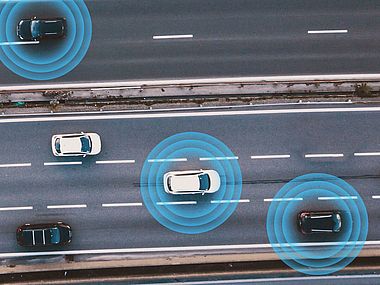
Vehicle-to-Everything (V2X) connects vehicles, infrastructure, and mobility services. Intelligent communication optimizes traffic, enables new applications, and requires comprehensive software expertise.

Competencies

Ensuring the secure and efficient transfer and use of data between vehicles, infrastructure, and mobility services.

Facilitating the interaction of data in highly automated vehicles with intelligent infrastructure, providing value-added services based on a precise and highly available digital twin.

Linking different modes of transportation to create a seamless mobility experience, including the integration of various platforms.

Development of methods for formalizing, verifying, monitoring, and analyzing continuous usage control systems across cloud, edge, and IoT environments.

Optimization of routes and schedules for fleet vehicles to increase efficiency and reduce emissions.outen und Fahrplänen für Flottenfahrzeuge zur Steigerung der Effizienz und Reduzierung von Emissionen.

Reference projects

KoSi

Safe collaborative behavior planning demonstrated in mixed-traffic on-road scenarios

The goal of the Cooperative Autonomous Driving with Safety Guarantees (KoSi) project is to develop an approach for collaborative behavior planning for…
Better Scenario Testing

High-quality scenario-based testing for autonomous cars
The Better Scenario Testing (BEST) targets companies involved in developing self-driving vehicles. We help companies develop high-quality test cases to assess…
Providentia

Safe, connected driving on the digitally-enhanced highway

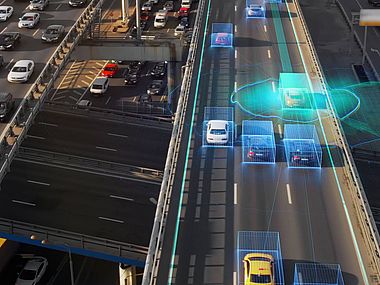
Reliable and comprehensive preview of the traffic situation by means of powerful, distributed sensors for highly-automated vehicles that are connected via…

Insights

Sucess story

The key to save driving

Autonomous driving will revolutionize the automotive industry, with artificial intelligence enabling key predictions about the behavior of all road users; the BARK software platform developed by fortiss uses AI to develop a wide range of behavioral models for safe and reliable predictions.
Whitepaper

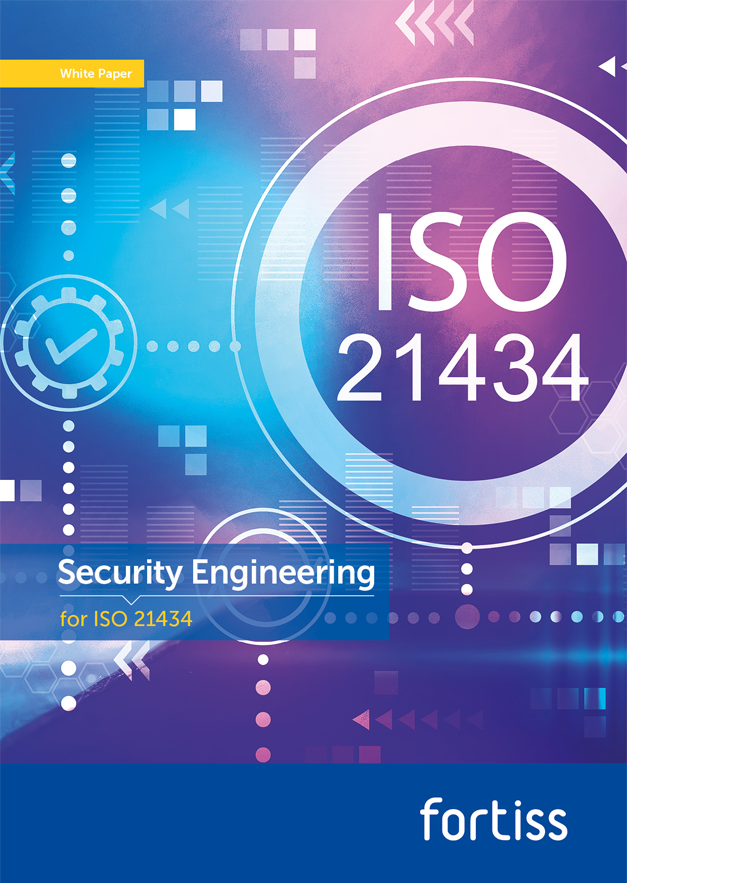
Security Engineering for ISO 21434

A detailed overview of ISO 21434 in the automotive sector outlines an approach to automating risk analysis and safety verification processes.
Use Case

Safe and user-friendly human-machine interaction

Modern infotainment systems are designed to minimize driver distraction and enhance comfort and safety. Human-centered software development is essential for creating intuitive and efficient solutions.

Competencies

Ensuring the transparency, trustworthiness and comprehensibility of AI decisions for the user.

Enabling interaction with the vehicle through various modalities such as speech, haptics and gestures/movement.

Development of AI-based assistance systems to improve driving safety.

Development of systems for better and safer decision-making based on the driver's current mental state (e.g. fatigue sensors, stress measurements or attention recognition).

Reference projects

KI-NC

Event-based perception algorithms for autonomous driving

This project explores the potential of brain-inspired algorithms, in particular spiking neural networks (SNNs), for sensor data processing in autonomous…
Explainable AI

Explainable AI for driving assistance systems
The project Explainable Artificial Intelligence (AI) for Driving Assistance Systems investigates how to predict and explain the lane change behaviour of…
KI Absicherung

Safe AI for automated driving

Development and investigation of methods and measures for assuring AI-based functions for highly automated driving. Using the use case of pedestrian detection,…

Insights

Mobility Lab

Efficiently developing safe autonomous systems with MBSE and test automation

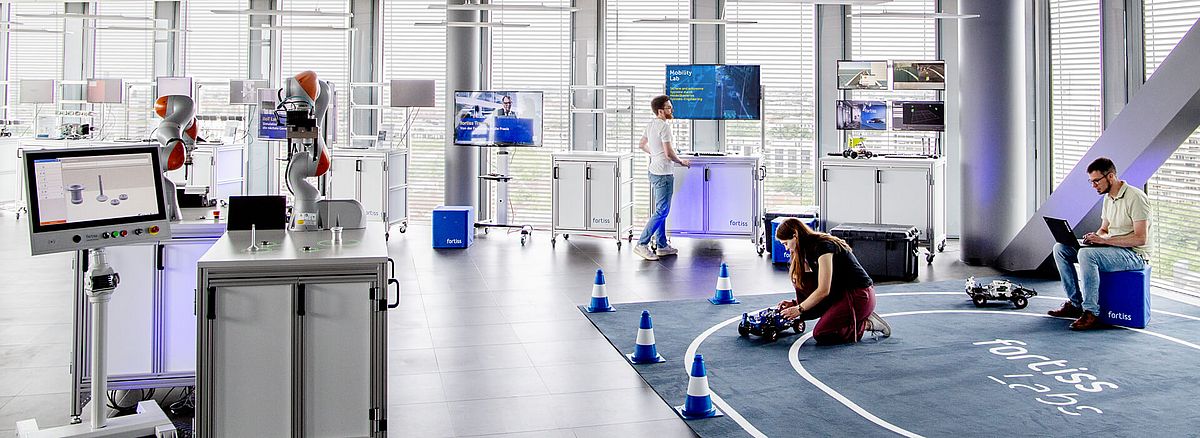
The Mobility Lab demonstrates how model-based systems engineering and automated software testing make the development of complex cyber-physical systems more efficient, safer, and more cost-effective.
Interview

Automation and integration as the key to efficient safety

In this interview, Tiziano Munaro explains why automation and integration are crucial for keeping pace with increasing complexity. He discusses how fortiss supports companies in making security testing more scalable, cost-effective, and future-proof.
Use Case

Digitalization and automation in automotive production

Modern technologies enhance efficiency and quality in production. Intelligent systems create new technological opportunities — with precise system integration and high data security as the foundation for plant design.

Competencies

We use models for systematic planning, optimization, and simulation of vehicle systems and production processes.

Synthesis of plant architectures and production plans for flexible and individualized production with digital twins and model-based systems engineering.

Combination of simulated tests with real data and scenarios to create a comprehensive and realistic test environment.

Real-time acquisition and processing of sensor data to optimize production control. 


Autonomous production of multi-variant configurations for the automatic configuration of production systems for individualized one-off productions.

Prediction of maintenance requirements for production systems to avoid unplanned downtime and production losses.

Creation of virtual models and simulations of production systems and processes to optimize production.


Creation of complex scenario-based tests using advanced algorithms, machine learning and model-based techniques to dynamically generate comprehensive production test cases.

Reference projects

KOMET

Platform for continuous analysis of model quality in systems engineering
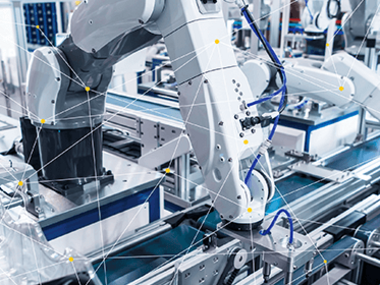
In the KOMET project, fortiss is developing automated methods to improve the quality of system models used in the development of complex products such as…
Data Backbone

Data infrastructure for continuous production without system interruptions
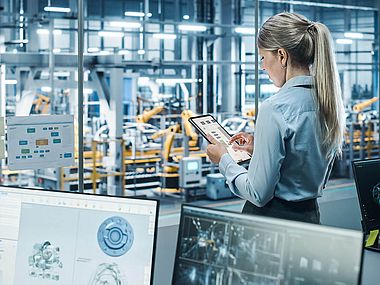
Data Backbone is integrated digital engineering from the production order to the executable robot program based on an infrastructure that unites process data…
DiProLeA

Digital product development process with learning assistance system

The DiProLeA research project is developing an in-house and user-specific assistance system for an end-to-end digital product development process. The…

At a glance

By activating this video, you consent to transmitting data to YouTube.

Interview

Why testing is becoming the most important discipline in the automotive industry

Prof. Dr. Andrea Stocco explains how his team helps companies ensure the security of complex AI systems—using scenario-based testing, cross-simulations, and generative AI.

Services for the automotive industry

Services

Your innovation starts with fortiss

We support companies and government agencies in developing innovative products, processes, and services in software and systems engineering, AI, and IoT – drawing on our experience from over 350 projects, from concept to implementation.
Workshop

Model-based Systems Engineering: Basics and potentials

The course provides a practical introduction to MBSE using an open-source automotive case study, showing how model abstraction helps manage the complexity of safety-critical systems.
click to return to top of page