Political support for data centers
On March 18, 2026, the German federal government adopted the first national data center strategy to establish Germany as a leading location for data centers. In light of the rapid growth in data volumes and the increasing use of artificial intelligence, computing capacities are to be at least doubled by 2030, and the computing power required for AI quadrupled. Modern data centers are far more than isolated IT sites: they are increasingly becoming strategic partners for municipalities, public utilities, and the regional economy.
Key elements of the strategy include the provision of suitable sites, a high-performance and sustainable energy supply, and the promotion of technological sovereignty. Through the intelligent use of waste heat, flexible energy grids, and municipal participation, data centers can actively contribute to stabilizing the energy system, thereby creating both economic and ecological benefits for the regions. In this way, the Federal Government simultaneously supports digitalization, competitiveness, and the energy transition while strengthening Germany’s position as a leading location for digital infrastructure.
Data centers: more than just server rooms
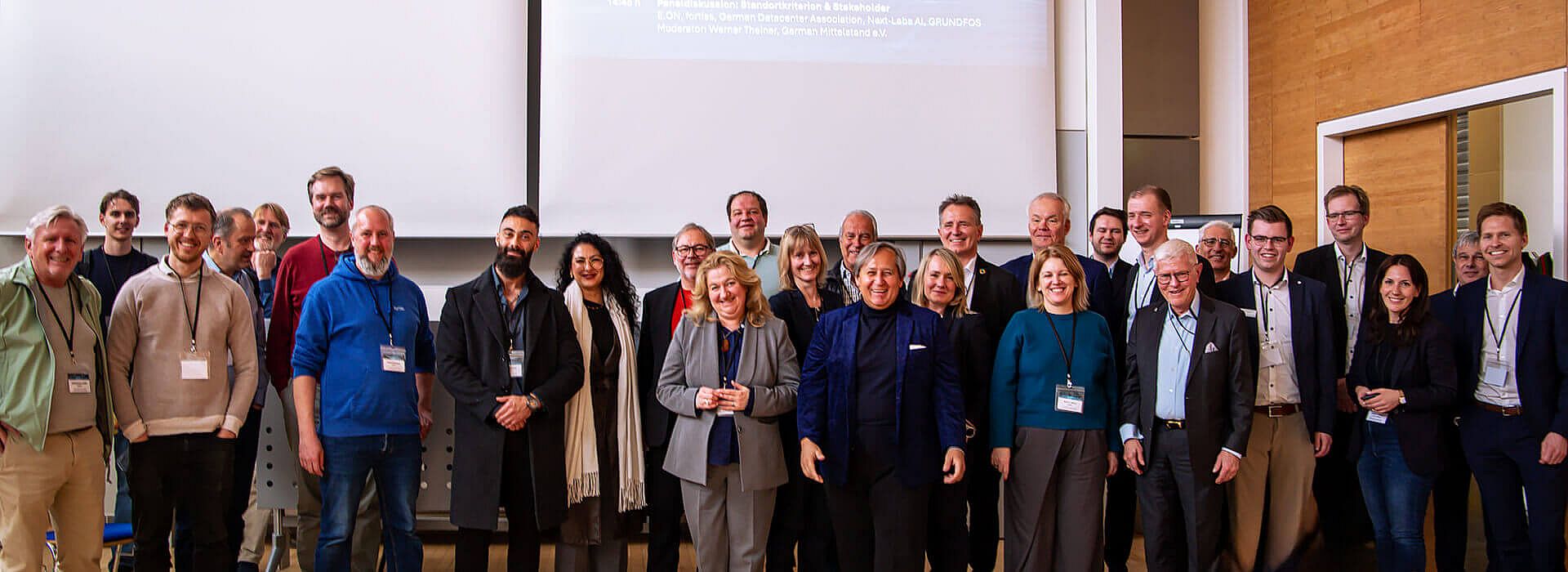
During the informational event “Data Centers for Municipalities and Cities,” it became clear that the enormous demand for computing power is drastically increasing the demands placed on infrastructure. Data centers are increasingly becoming a decisive factor for regional competitiveness. While Germany is intensively striving for digital sovereignty, many projects are currently being developed more quickly abroad, which is why municipalities must take targeted countermeasures through active location policy and the removal of bureaucratic hurdles.
Available network capacity is a key criterion in site selection today. Thanks to energy flexibility, data centers can themselves play an active role in stabilizing the energy system in the future. For municipal utilities and local heating planning, the consistent use of waste heat also offers enormous opportunities to drive local decarbonization and create real economic value for citizens.
A strong alliance for Bavaria
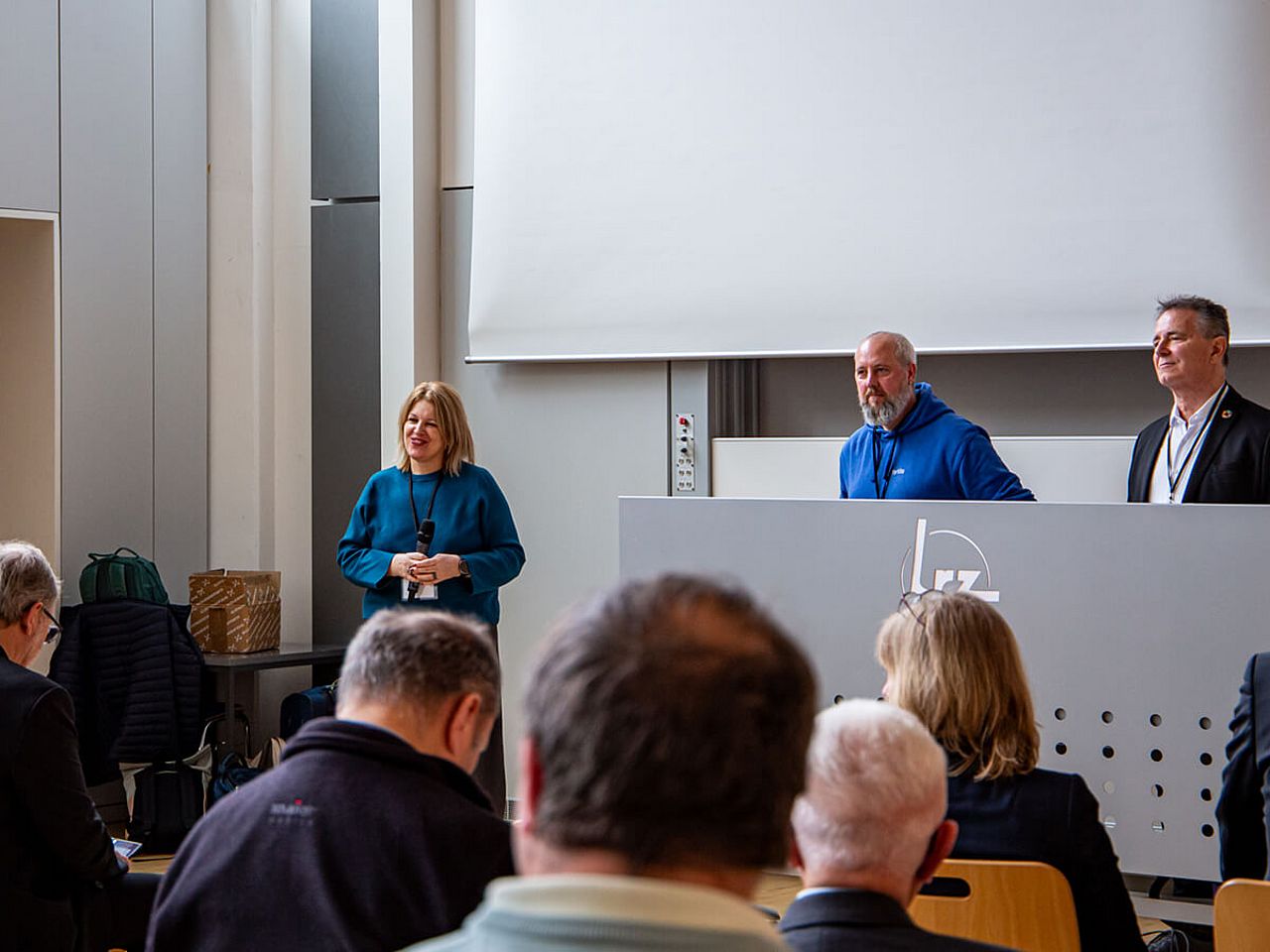
The event was organized by a high-profile alliance that presented practical solutions for energy suppliers and technology partners. The German Datacenter Association (GDA) provided important insights into policy areas and industry standards, while E.ON Energy Infrastructure Solutions, together with GRUNDFOS, presented technical concepts for efficient heating and cooling supply as well as innovative pump technologies. The spectrum was complemented by Next-Labs AI, which focused on the entire AI value chain as well as specific funding opportunities for municipal energy solutions. Together with Next-Labs AI, fortiss presented research projects on AI in the energy sector—including the data exchange platform NEED. fortiss also demonstrated control options for heat-driven operation of well-connected data centers.
Expertise from research
Dr. Markus Duchon (Head of Architectures and Services for Critical Infrastructures) emphasized the need for close collaboration between research, industry, and the municipal sector: “Data centers are the powerhouses of digitalization, but they must also become powerhouses of the energy transition. Together with our partners, we are demonstrating that the intelligent integration of these facilities is not at odds with grid stability. fortiss provides concrete support to municipalities and public utilities in utilizing systems in such a way that computing loads are flexibly managed and waste heat potential is optimally integrated into local grids. Only through this technological sovereignty can we ensure the economic relevance of our regions.”
Networking and innovation on site
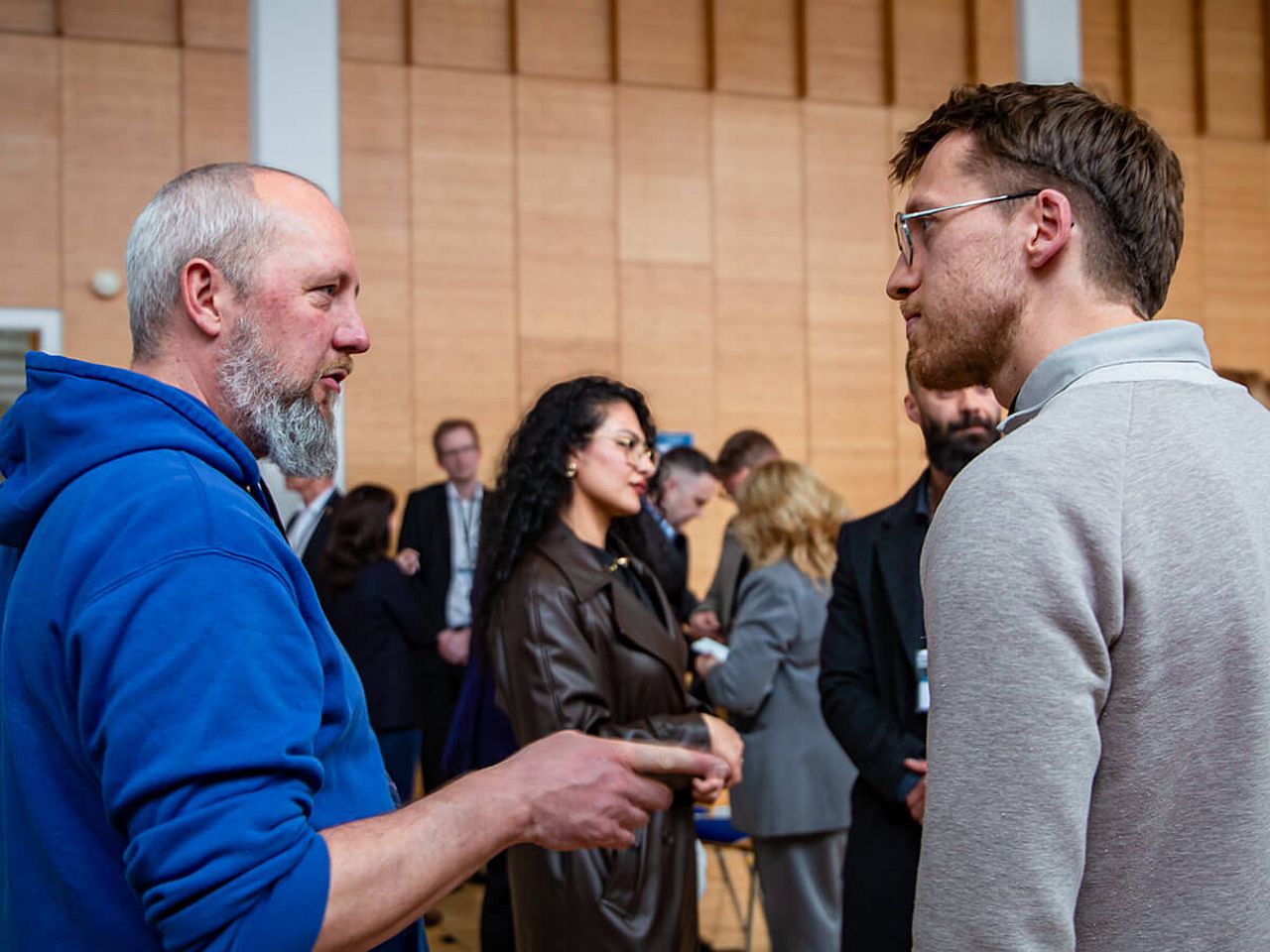
The event also included an exclusive tour of the Leibniz Data Center, one of Germany’s largest and most sustainable data centers, to put theory into practice. The subsequent panel discussion addressed topics such as the AI boom, the competition among locations, and digital sovereignty—crucial factors for the economy, energy infrastructure, and municipal development. The lively exchange during the concluding networking session confirmed that Bavaria’s digital transformation will only succeed if energy providers and municipalities view data centers as an opportunity for smart infrastructure.