


Case study EILE – Energy knowledge and intelligent application
Rising energy costs and CO₂ reduction requirements present SMEs with challenges in implementing effective energy management. As part of the EILE project, fortiss developed a practical process model, a simulation tool for optimising energy use and an innovative measurement kit. This provides SMEs with a step-by-step guide to lowering emissions and reducing costs.
fortiss coordinated the EILE (Energiewissen und InteLigente AnwEndung) project as part of the Mittelstand-Digital initiative. The aim was to provide SMEs with accessible, sustainable energy management solutions to enhance efficiency, cost-effectiveness and sustainability.
Solution
fortiss developed the software integration and detailed consumption models based on the collected measurement data and transferred these into a simulation environment. In addition, the team developed innovative, non-invasive measurement kits for flexible energy monitoring in SMEs. A practical guide to measures and a calculation tool support companies in CO₂ accounting, load and PV generation forecasting, and energy optimisation.
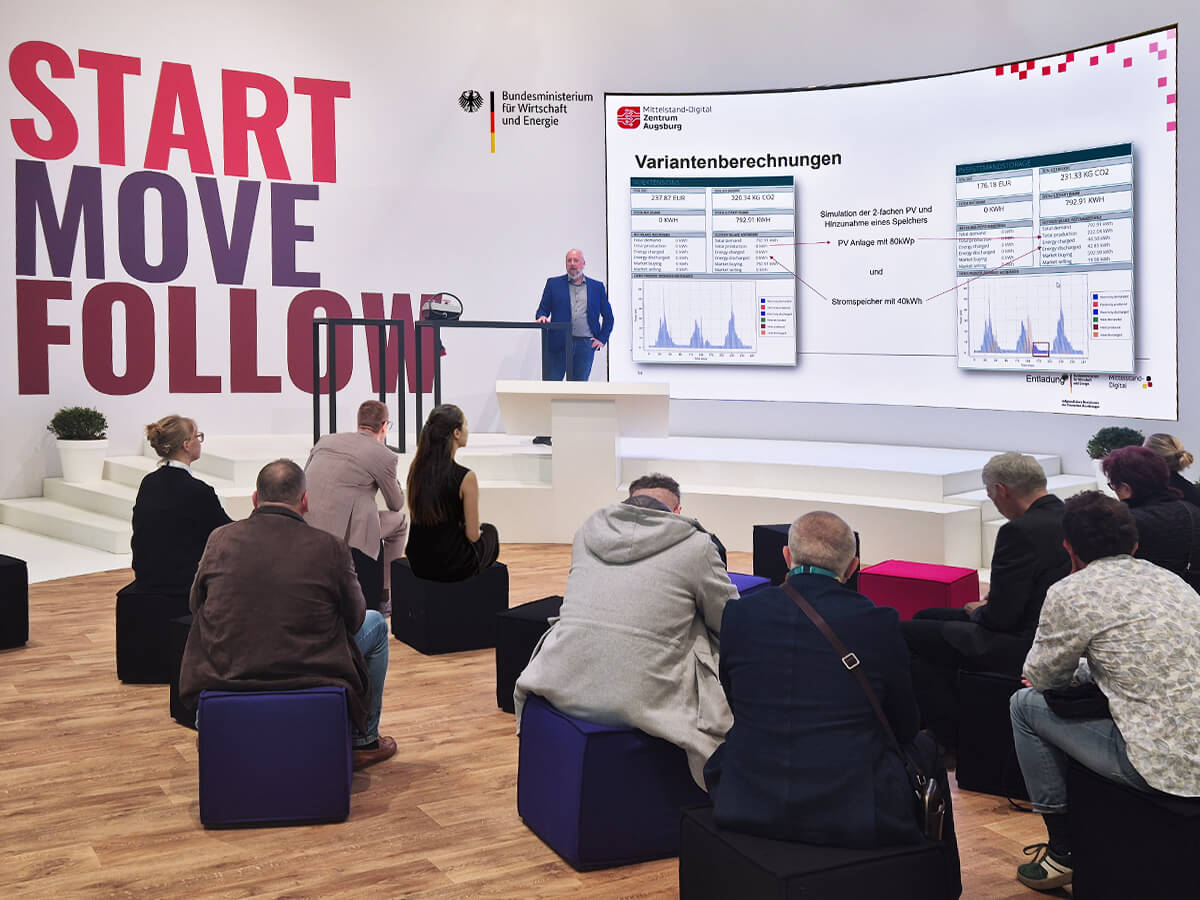
As a Digital Innovation Hub, fortiss also organised webinars to share this knowledge and promote the widespread application of the developed system.
Result
- Development of ten innovative, non-invasive measurement kits for flexible energy monitoring
- Creation of a guide to best practice and Excel tools to support CO₂ accounting, forecasting and optimisation
- Facilitated the introduction of energy management systems in two companies to date
- Presentation of project results at 34 trade fairs, conferences and workshops to maximise reach
- Development of open-source simulation tools and semantic models for wider industrial use
Outcome
The EILE project demonstrated that combining innovative measurement technology with data-driven models and clear implementation guidelines effectively empowers SMEs to overcome barriers in energy management. fortiss’s coordinated approach ensured practical relevance and enabled companies to reduce emissions and costs, as well as to strengthen their resilience to rising energy prices and regulatory requirements.
Project partner