


Case study KI Wissen
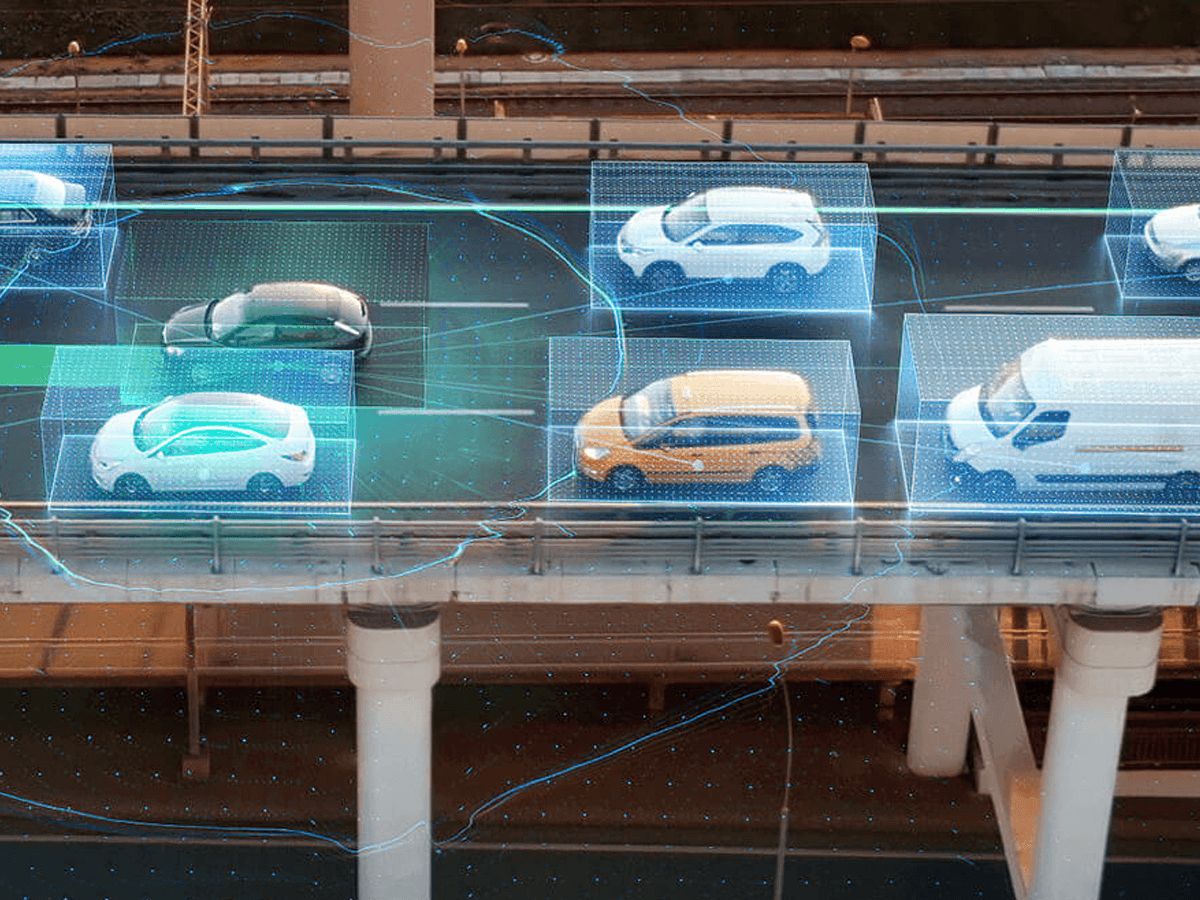
Traditional AI for autonomous driving struggles with limited data in safety-critical situations. In the KI Wissen project fortiss integrated knowledge-based methods into machine learning to enhance safety, interpretability, and data efficiency. This creates a robust foundation for reliable, trustworthy autonomous systems.
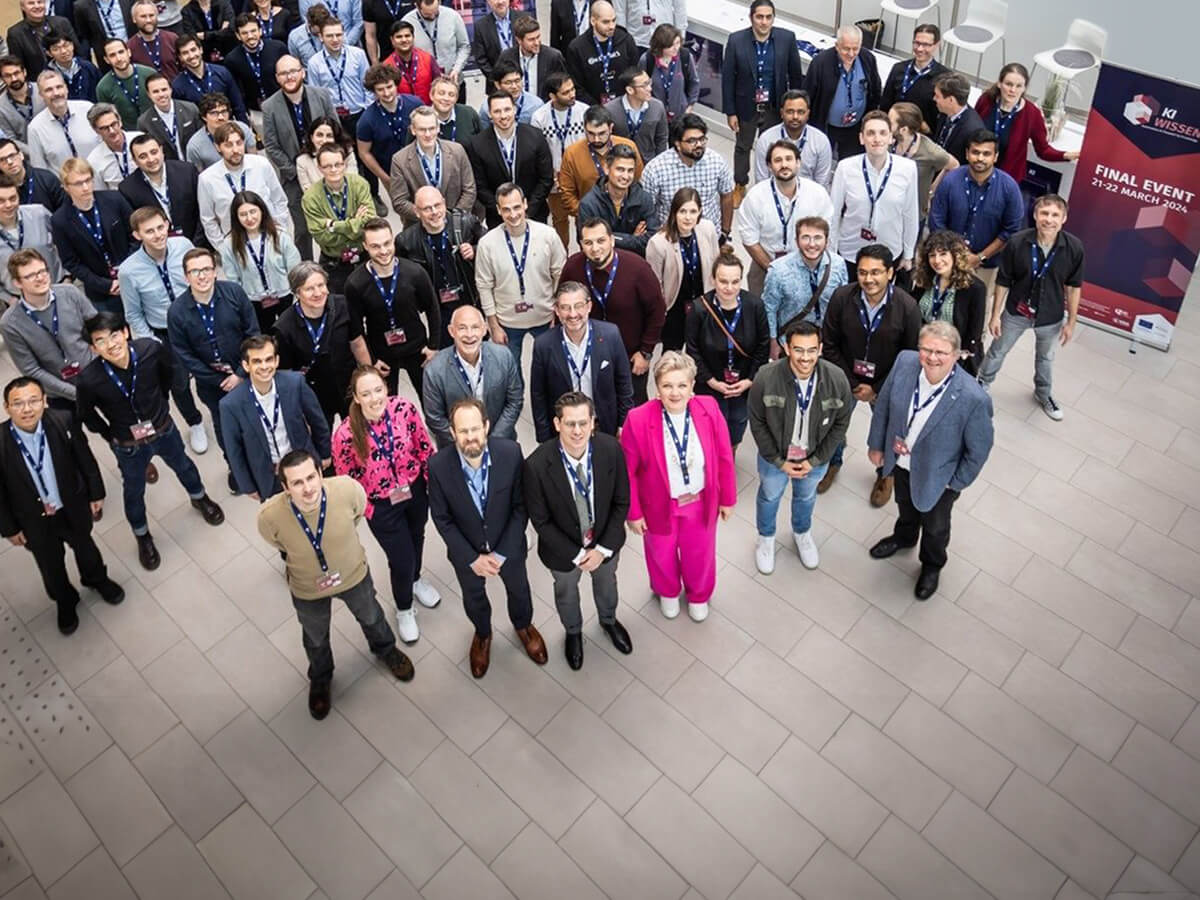
KI Wissen is a collaborative research project involving 15 partners from industry, research institutions, universities and public administration, funded by the Federal Ministry for Economic Affairs and Energy (BMWE). It's mission was to enhance data-driven AI through knowledge integration in order to improve the functional quality, safety and efficiency of autonomous driving.

Challenge
Autonomous systems struggle to handle rare or complex scenarios reliably, as their learning is purely data-driven. However, conventional machine learning approaches require vast training data, which is often unavailable for critical traffic situations, thereby limiting the reliability of the AI.
Solution
fortiss developed hybrid AI methods that integrate traffic-related knowledge, physical constraints, and behavioral rules directly into the AI training process to enhance robustness and transparency. This included decoupling input data features such as shape, color, and orientation to improve model interpretability. fortiss also developed approaches for uncertainty estimation to verify model outputs and ensure conformity with the intended behavior.
All methods were extensively tested and demonstrated in realistic scenarios for object and pedestrian detection as well as in robust environmental perception.
Result
- Development of hybrid AI methods integrating knowledge with data-driven models for autonomous driving
- Enhanced object and pedestrian recognition through knowledge-augmented learning
- Improved model interpretability via disentangling of input features
- Uncertainty estimation approaches ensuring behavioural conformity and safety
- Demonstrated applicability in real-world scenarios, increasing trust in AI-based driving functions
Outcome
KI Wissen showed that combining knowledge-based methods with machine learning significantly improves AI’s safety, data efficiency, and interpretability. fortiss’ innovative approaches enable trustworthy autonomous systems capable of handling complex traffic scenarios reliably, setting a benchmark for future AI development in mobility.
Project partner