



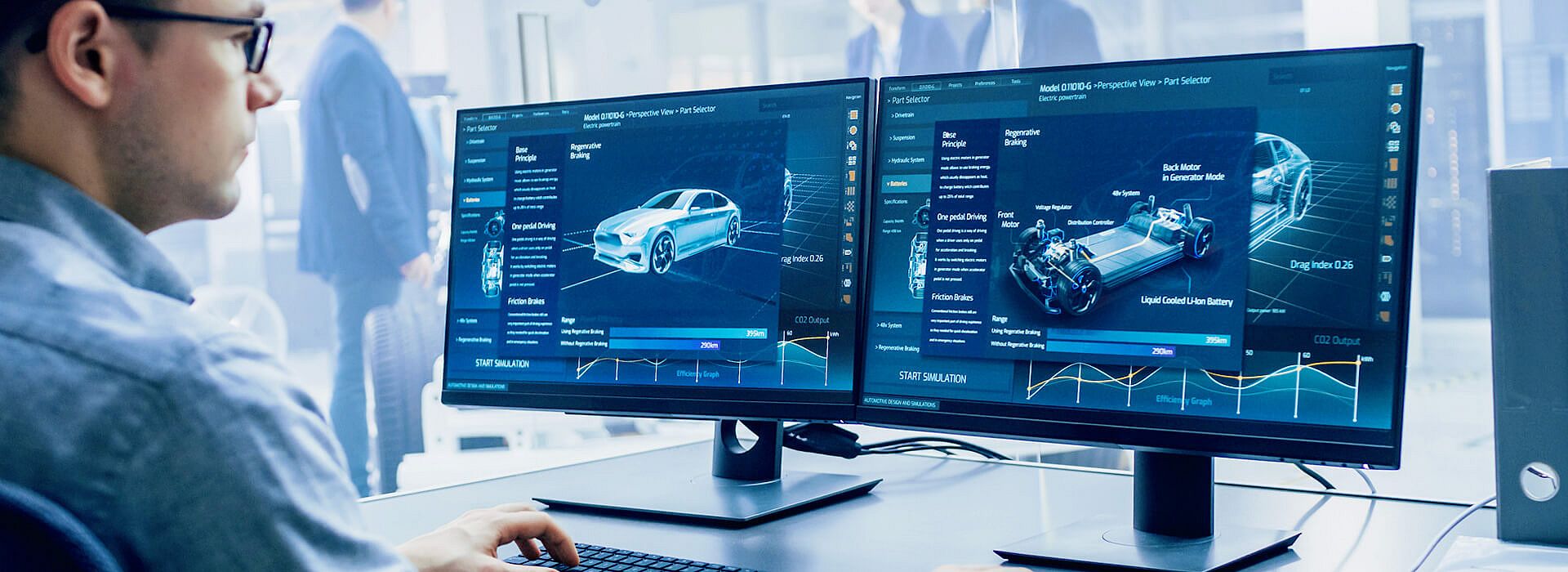
Innovation hub to strengthen software expertise for the automotive industry
TASTE
Project description
The Transformation Hub Automotive Software Engineering (TASTE) pursues the long-term goals of establishing software development (SWE) as a strategic first-level topic in the automotive sector and establishing an industry-wide SWE culture. During the period of the project, the Hub will act as an incubator and multiplier for modern SWE methods and strengthen the automotive sector's competencies for integrating software along the value chain and product lifecycle.
The Transformation Hub Automotive Software Engineering fills a gap in the competence and networking landscape of the German automotive industry. SWE is at cross-purposes to the established engineering domains in the automotive industry and has not yet been reflected in supplier structures or their associations and committees.
Research contribution
The transformation and knowledge transfer concept comprises four fields of action:
- Matching needs and offerings
- Training and skills
- Transformation and scaling
- Networks
For matching, a hub of stakeholder needs and existing offerings is developed and linked. Skills and training will be used to transfer competencies and knowledge of results and solutions from research and development for the hub's target groups. For transformation and scaling, transformation potentials will be demonstrated to companies, transformations will be initiated, and solutions will be scaled. Networks will be used to link both the hub with the various target groups and the target groups with each other in order to generate multiplier effects.
Funding
Federal Ministry for Economic Affairs and Energy (BMWE)
Funding reference number 16THB0009C
Project duration
01.11.2022 – 31.12.2026
Demonstrator
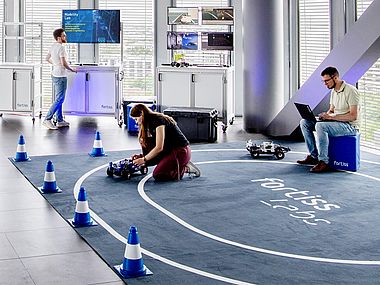
Developing safe autonomous systems efficiently and automating testing
Contact
More information
- TASTE website
- TASTE Linkedin
- Workshop: Model-based Systems Engineering: basics and potentials The course offers a practical insight into model-based systems engineering (MBSE). Using an end-to-end open source application example from the automotive industry, it shows how abstraction in models can be used to overcome the complexity in the development of safety-critical systems.
Project partner



