



An interactive, neuromorphic sound installation for a new form of human-machine communication
TONUS
Project description
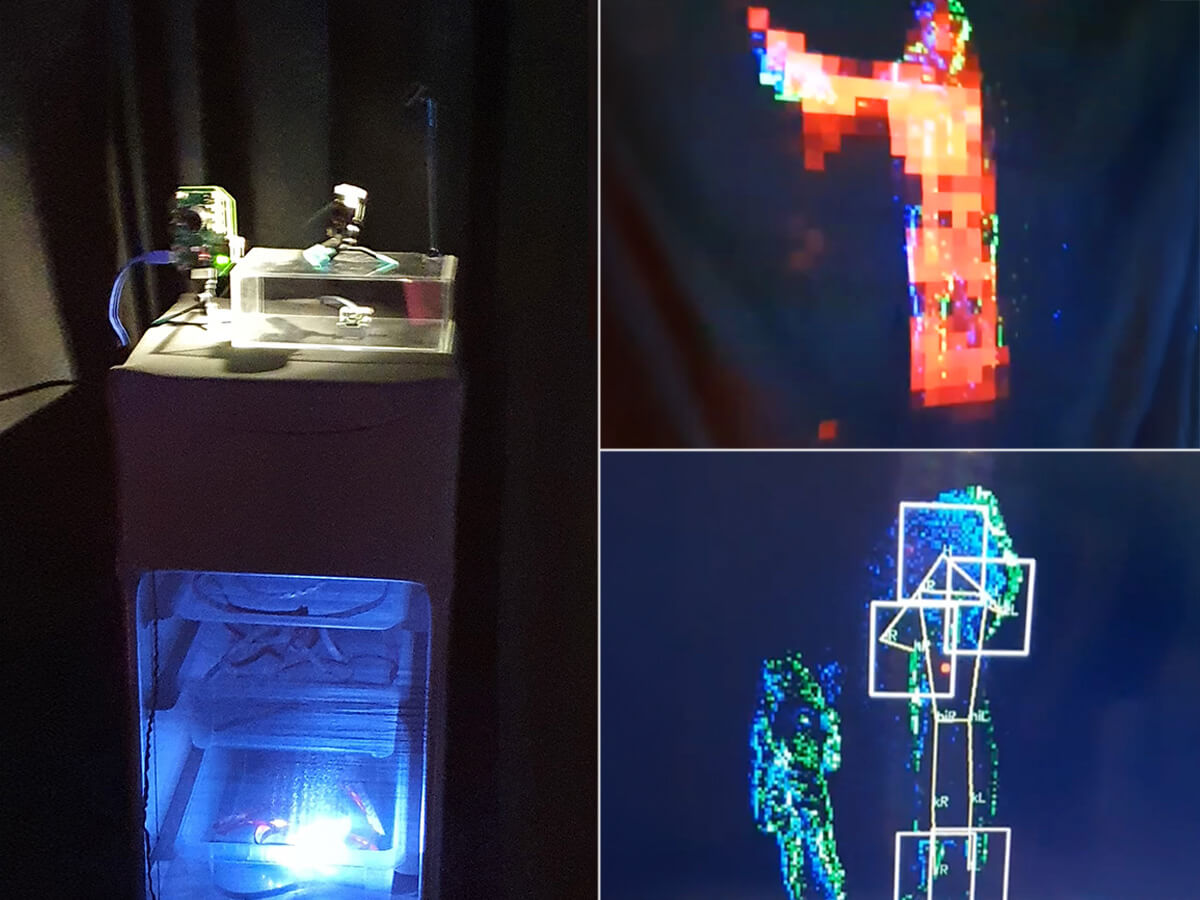
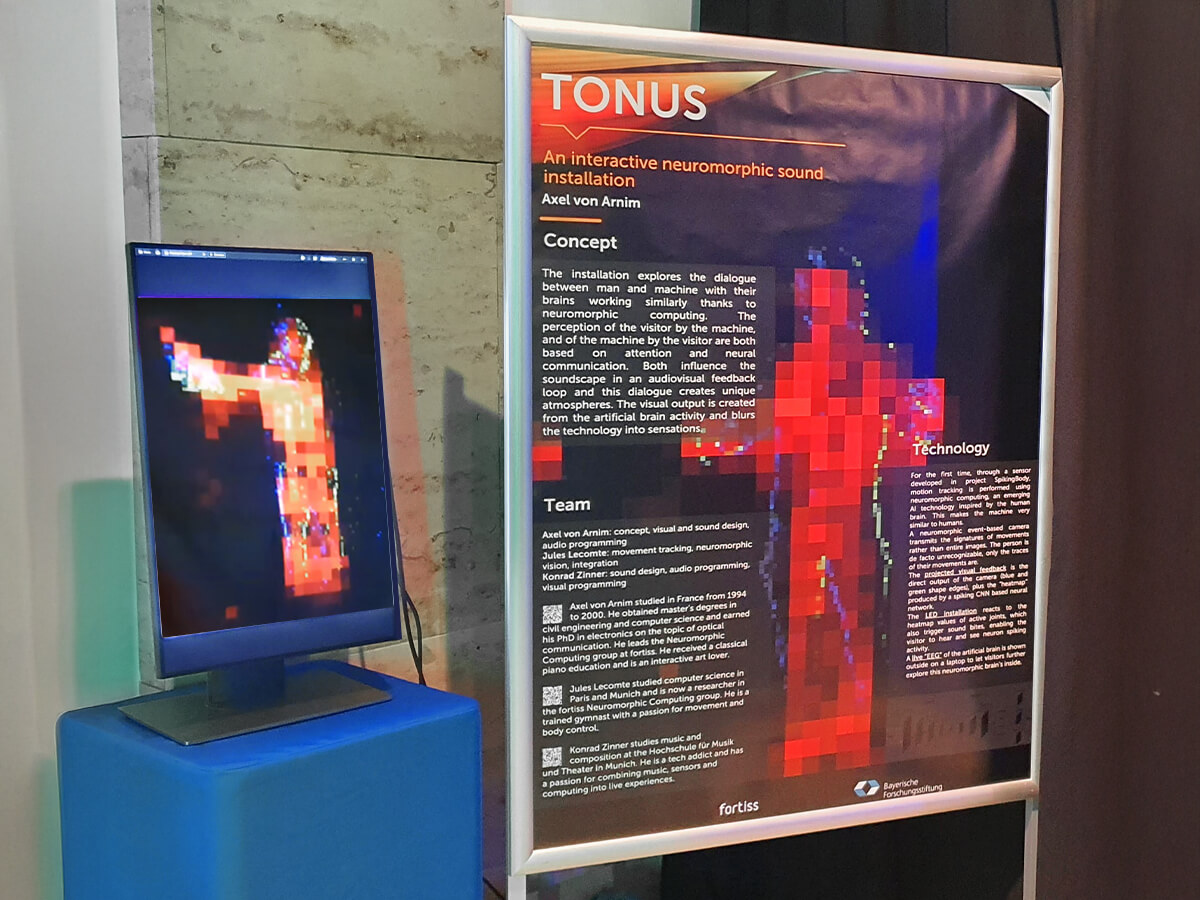
The installation proposes different sound atmospheres. It uses double pose estimation with two neuromorphic cameras to calculate a localized skeleton representation of the visitor. A neuromorphic chip runs the encoder part of the AI algorithm, which generates very sparse data and uses little energy. The visitor’s body movements as well as their localization and pose are tracked and control changes in soundscapes. The installation has a dual purpose. It exposes the internals of the neuromorphic brain’s activity in a pure yet not obvious visual feedback. It also revisits the body controlled sound stylistic exercise with a more direct dialogue with the machine and with richer soundscapes.
A set of soundscapes create different artistic environments.
- Le tourbillon de la vie: This sound experience dives the visitor into a nostalgic atmosphere,. Time is the binding factor between the visitor and the neuromorphic algorithm, which reacts on time sequences. The famous song from Jeanne Moreau is sung a capella, while sounds of pleasant remembrances pop up with the visitor’s arm and leg movements.
- Tech now: A closed feedback between the machine and the visitor creates a techno loop. Visitor’s arm movements trigger new tracks or generate effects, the level of activity raises percussions, The techno loop is built step by step in a more and more exciting sound.
- Screaching: Here the connection between the visitor and the neuromorphic algorithm is direct. The visitor’s limb movements are transformed by the algorithm into sounds, creating a unique dialogue.

Research contribution
For the first time, motion tracking is performed using neuromorphic computing, an emerging AI technology inspired by the human brain, simulating the very details of biological neurons, in contrast to conventional AI. This makes the machine very similar to humans.
Neuromorphic event-based cameras transmit the signatures of movements rather than entire images. The person is de facto unrecognizable, only the traces of their movements are.
The network of spiking neurons runs on a neuromorphic chip that mimics a biological brain. Our goal is to confuse the visitor by showing this neural similarity between them and the machine, via sound and light feedback, by visually representing the activity of the machine's neurons in an abstract way and blurring the technological separation.
Another special feature of neuromorphic technology is its very low energy consumption. It is also referred to as "Green AI". The neuromorphic chip is presented in such a way that it takes center stage. Its small dimensions and low energy consumption embody the frugality of green artificial intelligence.
Funding
Internal and through different projects, in particular SpikingBody.
Project duration
01.04.2023 - ongoing
fortiss Lab
Contact

More information
- Festival der Zukunft 2024 At the Festival der Zukunft, the TONUS installation was presented, demonstrating the possibilities of neuromorphic computing. The installation captured movements using a neuromorphic camera and chip, and used them to control sound.